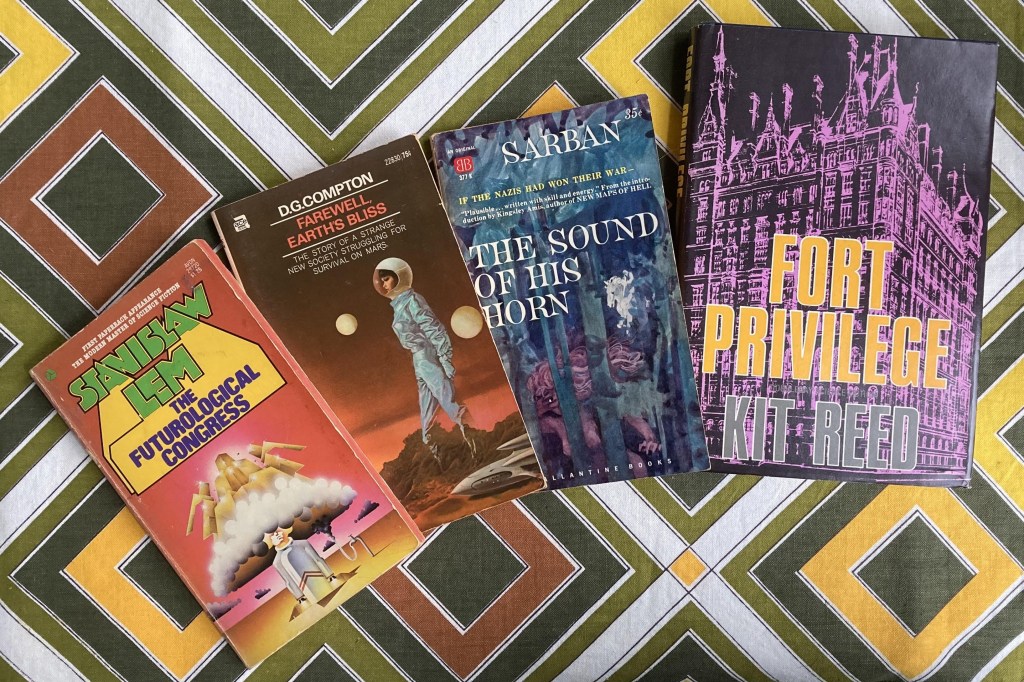
A selection of read volumes from my shelves
What pre-1985 science fiction are you reading or planning to read next month? Here’s the April installment of this column.
As readers of the site know, I am obsessed with the machinations of Cold War nuclear logic—historical and science fictional. In Ira Chernus’ brilliant Apocalypse Management: Eisenhower and the Discourse of National Insecurity (2008), he dives into the Manichean ideoscape that dominated Eisenhower’s thinking. In short, he posits that Eisenhower interpreted the Soviet threat as an apocalyptic struggle in which the traditional outcome, eliminating the treat, is impossible. Instead the best hope is “to contain and manage it forever” (2)–hence “apocalypse management.” This “new linguistic paradigm” profoundly influenced their policymaking process and dominated American public discourse.
According to Chernus, Eisenhower was obsessed with Americans practicing voluntary self-control in their consumption in order shoulder the taxes needed to fund the perpetual struggle. With this paradigm, Eisenhower’s gestures towards peace–for example his “The Chance for Peace” (April 16th, 1953) speech–were acts of calibrated psychological warfare designed to put the burden of action on the Soviets and score points with the American public and American allies. The United States, on the other hand, could wage the conflict with perpetual, safe, and managed inaction in which peace is never the ultimate objective.
And now the science fictional parallel–Philip K. Dick’s masterful Eisenhower-era short story “Foster, You’re Dead” (1955) in Star Science Fiction Stories No. 3 (1955). I wish I had read Chernus’ book before analyzing PKD’s vision! I can’t help but suspect that Dick is deliberately channeling Eisenhowerisms in his nightmare of the burden placed on Americans to wage a perpetual state of disaster preparedness. As I mention in my review, “Foster, You’re Dead” is one of the absolute best fallout shelter themed SF stories I’ve ever read. It’s a fascinating collision of crisp prose, commentary on the arms race, and an evisceration of the complicity of commercialism in Cold War terror.
Let me know what SF you’re reading!
The Photograph (with links to reviews and brief thoughts)
- Stanislaw Lem’s The Futurological Congress (1971, trans. 1974). While I never managed to review this one, I thoroughly enjoyed this satirical gem. The vast quantity of my Lem reading–many novels and collections–happened before I started writing about genre.
- D. G. Compton’s Farewell, Earth’s Bliss (1966) is one of his best, and most uncompromising, novels. I describe it as a character study of a group of convicts sent to Mars and their attempts to integrate into an incredibly repressive and conservative society (derived in part to to the extreme dangers of the Martian environment) — in short, a piece of race and religion themed social science fiction. I also love the Karel Thole cover art.
- Sarban’s The Sound of His Horn (1952) spins a hypnotic horror in which a soldier, escaping from a Nazi prison camp, awakes in a dystopia a hundred years after Hitler’s victory in WWII. It’s unusual. It’s terrifying. It’s possessed by a gorgeous turn of phrase. And, in its most ruminative moments, an incisive exploration of the nature of desensitization and the fear that underpins all actions. Highly recommended.
- Kit Reed’s Fort Privilege (1985). Kit Reed’s short fiction cuts and cauterizes. The themes she explores in short work forms a laundry list of Joachim Boaz favorites–paranoia, post-apocalyptic landscapes, youth gangs, dislocation, drugged cities, mechanical toys, sinister retirement communities, rural ritual, and the power of media. For Privilege does not rank among her best but is worthwhile for her fans. I recommend tracking down Mister Da V. and Other Stories (1967).
What am I writing about?
As always, I have plans. For teaching job-related reasons, I was unable to devote my few moments of rest to my site. Thankfully, the semester is nearly complete and other than a short international trip planned, a summer of reading beckons.
I recently posted on three more interviews with Clifford D. Simak and the first three published short stories by New Zealander author Cherry Wilder. I should have two short books reviews up in the next few days as well.
What am I reading?
My Eisenhower binge continues! In addition to Ira Chernus’ Apocalypse Management, I’m reading Craig Allen’s Eisenhower and the Mass Media: Peace, Prosperity, and Prime-Time TV (1993). I have a more traditional account of his presidency lined up as well–Richard V. Damms’ The Eisenhower Presidency, 1953-1961 (2002)–which, retrospectively, I should have read first.
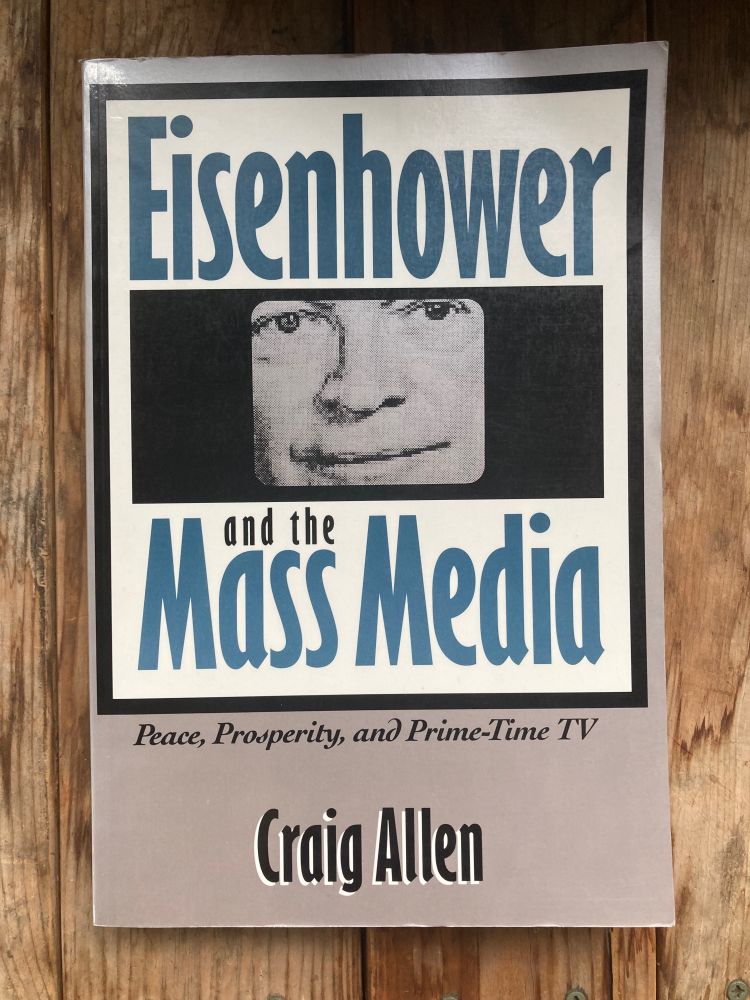
Allen’s Eisenhower and the Mass Media: Peace, Prosperity, and Prime-Time TV (1993)
A Curated List of SF Birthdays from the Last Two Weeks [names link to The Internet Speculative Fiction Database for bibliographical info]
May 12th: Philip Wylie (1902-1971).
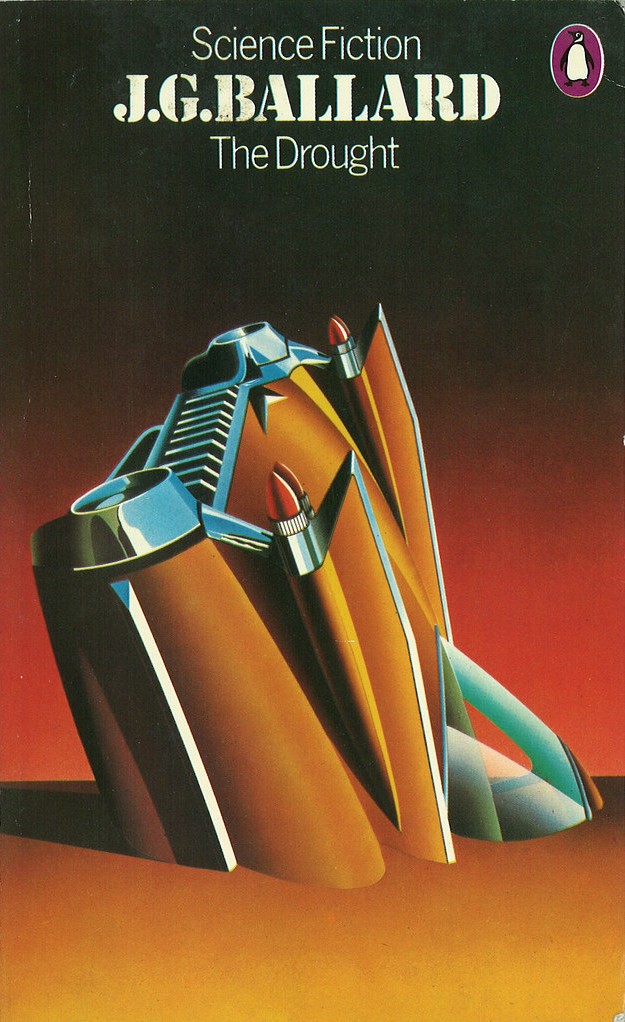
Pelham’s cover for the 1975 edition of J. G. Ballard’s The Drought (1964)
May 12th: Artist David Pelham (1938-). Yes, we all know his Ballard covers. For good reason!
May 12th: Barry B. Longyear (1942-2025). Another hole in my knowledge… I had no idea that he passed away earlier this month (May 6th).
May 12th: L. Neil Smith (1946-2021)
May 13th: Daphne du Maurier (1907-1989). I recently snagged a copy of her final, and only, SF novel–Rule Britannia (1972).
May 13th: Roger Zelazny (1937-1995). My most recent Zelazny review — To Die in Italbar (1973).
May 14th: Herbert W. Franke (1927-2022). I’ve only read a few of his short stories for a series that I’ve since abandoned. A glaring hole in my knowledge…
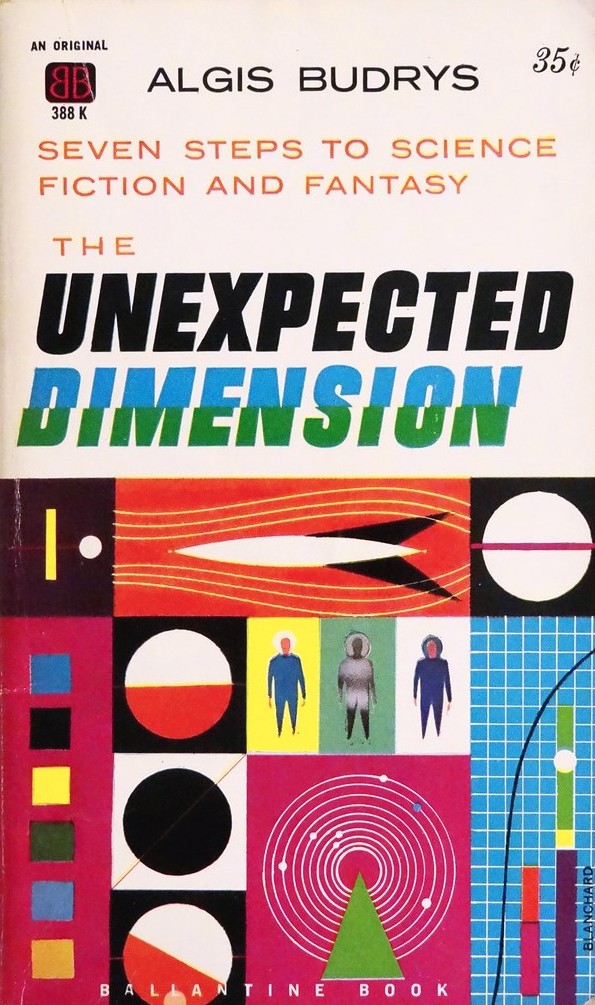
Blanchard’s cover for the 1st edition of Algis Budrys’ The Unexpected Dimension (1960)
May 16th: Bob Blanchard (1914-1993). I wish he created more covers. Everything about the Budrys cover above is perfect.
May 16th: Pierre Barbet (1925-1995). French pulp SF author I’ve yet to explore.
May 17th: F. Paul Wilson (1946-).
May 17th: Colin Greenland (1954-): scholar of the New Wave–The Entropy Exhibition: Michael Moorcock and the British ‘New Wave’ in Science Fiction (1983)–and SFF author. I found Daybreak on a Different Mountain (1984) a worthwhile read!
May 18th: Fred Saberhagen (1930-2007). I’ve covered two of his generation ship short stories: “Birthdays” (1976) and “The Long Way Home” (1961).
May 19th: Artist Walter Popp (1920-2002).
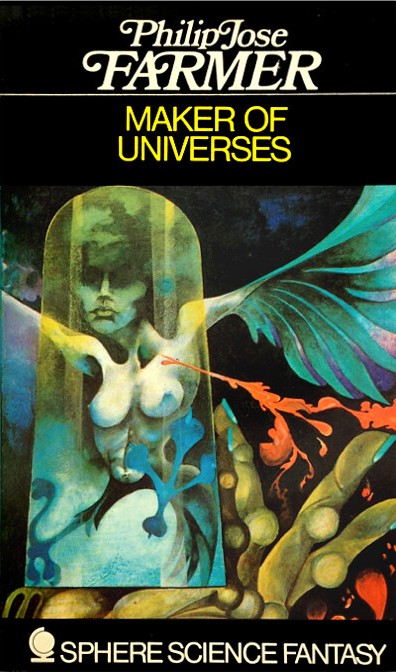
Botton’s cover for the 1970 issue of Philip José Farmer’s The Maker of Universes (1965)
May 19th: Artist Bill Botten (1935-). I have a soft sport for his covers. He should be better known!
May 19th: Artist Ken Kelly (1946-2022)
May 19th: Rob Chilson (1945-).
May 20th: Artist Pat Morrissey (1954-).
May 21st: Manly Wade Wellman (1903-1986).
May 22nd: Wallace West (1900-1980). Wrote one of the more disquieting/peverse post-apocalyptic stories out there–“Eddie For Short” (1953).
May 22nd: Ed Earl Repp (1901-1979). A staple of the 30s and early 40s pulps (Air Wonder Stories, Amazing Stories, Fantastic Adventures, etc.)– I’ve not encountered his work.
May 22nd: French author Jean-Louis Curtis (1917-1995) occasionally wrote SF. I reviewed his intrigued SF collection on martyrdom and decadence: The Neon Halo (1956, trans. 1958).
May 23rd: Artist William Timmins (1915-1985).
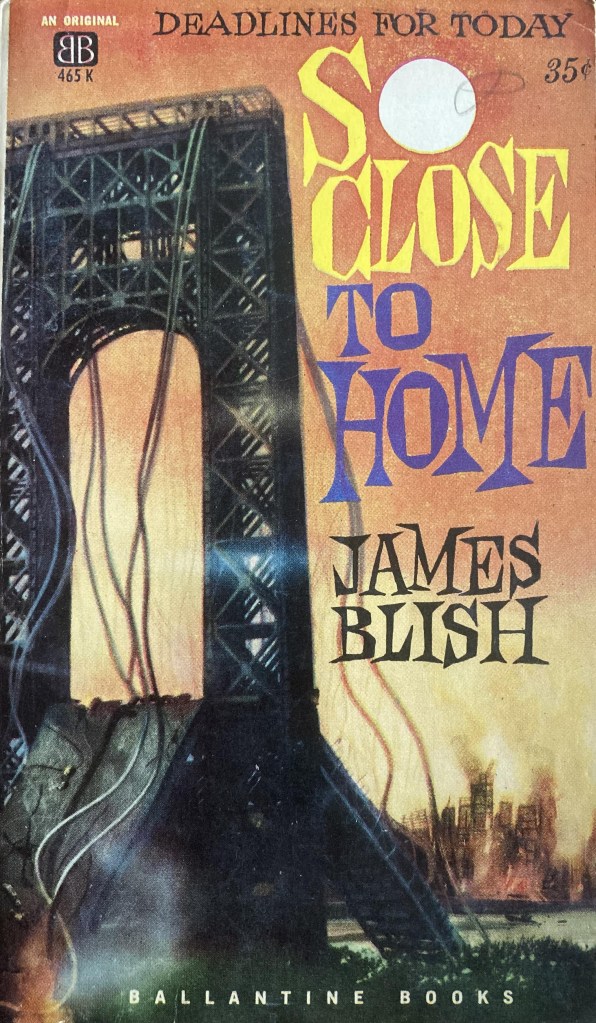
Richard Powers’ cover for the 1961 1st edition
May 23rd: James Blish (1921-1975).
May 23rd: Isidore Haiblum (1935-2012)
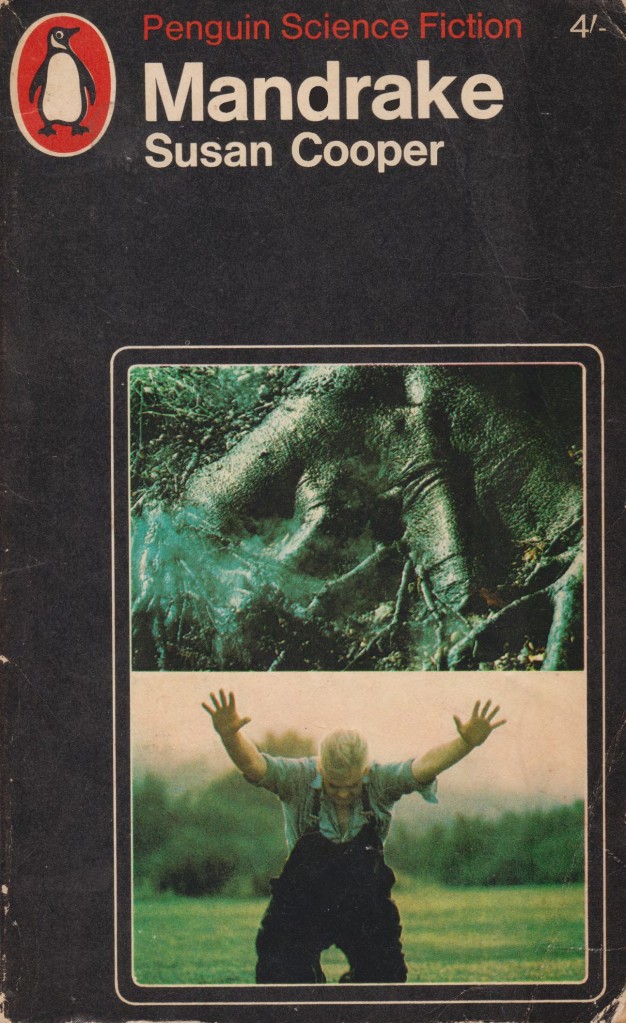
Michael Busselle’s cover for the 1966 edition
May 23rd: Susan Cooper (1935-). While best known for her fantasy sequence The Dark Is Rising (1965-1977) (which I adored as a kid), Cooper’s first novel was SF — Mandrake (1964).
May 24th: Irving E. Cox, Jr. (1917-2001).
May 24th: Hugo Correa (1926-2008). I reviewed a two of his stories for my SF in Translation review series: “Alter Ego” (1967) and “Meccano” (1968).
May 25th: Charles D. Hornig (1916-1999).
May 25th: Phyllis Gotlieb (1926-2009). Featured in my first three published short stories by female authors I should know more about series: “A Grain of Manhood” (1959), “Phantom Foot” (1959), and “No End of Time” (1960).
May 25th: Janet Morris (1946-2024).
For book reviews consult the INDEX
For cover art posts consult the INDEX
For TV and film reviews consult the INDEX
 Science Fiction and Other Suspect Ruminations
“Foster, You’re Dead!” is a personal favorite of mine. Haven’t read much pre-1985 stuff lately, but hope to get to Brunner’s Jagged Orbit sometime this year.
It’s one of my favorite of Dick’s 50s stories for sure. I read Jagged Orbit before I started my site — along with Brunner’s other best-received novels. It has faded a bit from my memory. I look forward to your thoughts on it!
Just finished The Wanderer. It wasn’t very good. Now reading Kallocain, sadly not in the original Swedish.
Yeah, no fan of The Wanderer… I enjoy a lot of Leiber’s work but not that one.
I was very amused by the apparently English dish “sausage-and-mashed”.
As for Kallocain, I still need a copy.
The ebook was 99p a couple of weeks ago, the new Penguin edition.
Oh an eBook is a guarantee that I won’t read it. Alas. I’ll find a paper copy.
There’s a paperback edition too
Of course. I’ve had it on my list to acquire for years and years but I’d forgotten about it.
Förstår Du svenska? I can send you a copy in Swedish if needed? BTW Did not know that it has been translated into English.
I know Ian lives in Sweden but I’m not sure how much he’s picked up since his move! He’ll have to let you know 🙂
Jag bor i Sverige och jag kan läsa svenska. Kallocain was apparently translated into English in 1966.
Currently reading Curt Siodmak’s ‘Donovan’s Brain’ and it’s certainly interesting. Foster, You’re Dead! seems right up my alley even as someone who is back and forth on PKD.
Hello Joel, I have heard of Siodmak but have not read any of his work. “Foster, You’re Dead” is PKD at his most polished and concise. It works. Completely.
I’ve just finished a quite short collection of stories by Margaret St.Clair – The MstC SF Megapack from Wildside, which is hardly a ‘megapack’ with only six stories in around 70 pages.of quite large type, with five from 1949-52 & one from 1960.
Thery’re all very readable with most of them set among the alien species & cultures of the rest of the solar system. Four of them have rather downbeat endings, one could very easily have a very downbeat sequel and only Return Engagement has a positive ending,although one of the characters probably doesn’t think so!
It’s a long time since I’ve read the author and I think I enjoyed these more than I would if I re-read Message From the Eocene (great cover!) or Three Worlds of Futurity. I don’t really remember them all that well though.
Did you have a favorite story from the collection? I read St. Clair’s “Stawdust” (1956) for my critical takes on SF space travel series but never managed to get around to reviewing it. I should give it a reread.
The one where they chopped his head off, probably not!
Thee one where he’s waiting to see if the alien sun will rise or not (strong implication it wont)?
The one where a character has to return annually to to perform humiliating dances for the natives?
Or where the crew then the spaceship vanish into darkness.
When a spaceman sends his aunt an exotic vegetable without mentioning that it’s carnivorous!?
Maybe where the protagonist is literally petrified and left to erode in the constant rain (The others are all broadly SF but this is more fantasy, with workable magic)
Favourites are probably either Return Engagement (somewhat comic) or The Vanderlark (cosmic horror!)
Curiously, both first published in pulps in Jan 1952!
If I remember, I’ll come back in a few weeks and say which one has stayed with me the most.
Sounds like a collection that demonstrate her manifest exuberant imagination. I am interested in tackling my best of collection of her work soon(ish).
I’ve just finished a short two-book departure into fantasy (one Leiber, one Moorcock) and am now back to SF with Time Out of Joint (1959) by Philip K. Dick.
I have faint memories of that PKD — pre-cite was the era of religious PKD reading. I’ll obviously keep my eyes out for your review.
Nothing in the currently reading pile, but I did want to thank you for the recommendation of Leigh Brackett’s The Long Tomorrow, finished earlier this month. I enjoyed it!
No problem! Speaking of post-apocalyptic nightmares, have you read Mordecai Roshwald’s Level 7 (1959)? Or, venturing outside of the US, Sven Holm’s Termush (1967, trans. 1969)?
Neither, but as I’ve mentioned here before, I’m always a sucker for that sub-genre. I will certainly check them out. Thanks!
And one of my favorites…. Speaking of Scandinavia! Twilight Country (1974, trans. Joan Tate, 1993) (it’s even better than the other two I listed) https://sciencefictionruminations.com/2021/07/01/book-review-twilight-country-knut-faldbakken-1974-trans-joan-tate-1993/
I think I’d classify it as a bit more dystopian than overtly post-apocalyptic.
I’m reading Paul W Fairman’s Ten From Infinity. It’s very. much of its era, to put it mildly. Ten androids are sent to Earth, only one is not somehow destroyed. It’s up to the dashing men of action to figure out what the aliens want and keep them from taking over. I’m not far enough in to tell if it’s going to turn into a clunky metaphor for the Red Menace. On thing that I like about though is that the androids really are alien. They don’t understand a lot of human nature.
A while back I started re-reading Fredric Brown’s What Mad Universe. I’m finishing it up. Very good satire of 1940’s pulp science fiction. The main character is an editor at a pulp science fiction magazine, so you get a glimpse of what it was like working at one of those magazines back then.
Let me know your final thoughts on the Fairman. I’ve not read any of his work. And due to my utter obsession with Cold War logic, I am always interested in clunky metaphors for the Red Menace.
I’ve read good things about the Brown. One of those novels I know I’ll get to eventually.
I don’t think Fairman was ever really good, but his ghostwriting on the OK juvenile novel The Runaway Robot (published under Lester Del Rey’s byline) was decent.
Hello Rich, it’s good to hear from you. I saw your recent Silverberg review (and commented). Other than that, what older SF is on your plate?
I suspect you’re right on the Fairman front.
Are you also interested in the Red Menace in the flesh, without the intervention of metaphor? It occurred to me that you might . . . not like . . . but be interested in Rog Phillips’s WORLD OF IF (1951), in which the protagonist is hypnotized into believing he’s living in the US after a mid-50s communist takeover. I read it some years ago and found it pretty hysterical in both senses. Amazon has it cheap for Kindle and there are copies of the paper book (one of the early digest-size paperback novels, which died out quickly) there and presumably from other sellers.
As Phillips is not someone I have read, it makes me doubly interested. I’ll put it on my list.
It’s funny, I picked up the Fairman because I have a soft spot for Cold War paranoia science fiction. Even though it frequently makes me roll my eyes so far back I strain my rectus muscles. The least subtle example I’ve encountered has got to be the movie The Brain Eaters. I think the studio got sued for ripping off Heinlein’s The Puppetmasters, so the aliens are parasites that take over the minds of humans…and whenever the aliens are near, Shostakovich’s 5th symphony starts playing. When I first saw it, I wondered if the producers did that to see how many people watching the movie figured out what they were doing. At least the aliens have a good theme song.
As for the Fairman, I’m about 2/3 though and it’s definitely a really clunky Red Menace metaphor. I’m pretty sure Earth is going to be saved by the national security guy who has far too much contempt for elected officials. It’s also got some very strange (and regressive) ideas about women and sex.
I’m all for Shostakovich’s 5th symphony (all of them really).
Look forward to your final assessment of the novel.
Currently churning through the Elric sequence in order. It’s … a lot, even with nonfiction bumpers between the original volumes. Finished “The Vanishing Tower” today, I’ve seen suggestions I should read at least two from the Von Bek sequence before proceeding into “Revenge of the Rose”; that’s … a lot more, but my incapacity to remember much of the Corum books I read 30 years ago when I needed them this afternoon has me convinced, I think. I fear I’m going to spend the entire year going through the entire damn corpus.
“Churning” — not a good adjective! Does not sound like you’re enjoying yourself. I had a friend in college who could not stop talking about the Elric novels. I’ve never picked one up.
I wouldn’t say I’m not enjoying myself! It’s just, the pacing’s affected by the structure of the volume — it’s a fix-up of multiple fix-ups, and even where it’s originally a full novel (The Fortress of the Pearl) it’s broken down into movements of about the same size as the original novelettes, so it feels like riding a commuter train and feeling it slow down and stop for stations at 10-minute intervals. And somehow the fixing-up retained (or inserted!) all the little catching-up tags referencing stuff you might need to be reminded of from a magazine issue two months ago, but not from 15 pages ago! (But then other incidents referenced more obliquely require pulling out the previous book to nail them down … for some reason the stories in Weird of the White Wolf particularly blur together after a couple weeks’ time off.) If I ever make it to an ending point, I’ll be interested to go back and read just the original stories in publishing sequence (the way it’s interesting to watch the original scripted sequence of episodes of The Prisoner without the bonus entires that were contracted for to pad it out to 17 weeks).
As Shaky Mo notes, there’s pleasure in the mood and atmosphere, but I think the real challenge of the books is precisely the parallelism and interaction with the other threads from elsewhere in the multiverse. I keep reflecting on the similarity to the Marvel corpus … what started out as several different multi-part loose narratives get over-complicatedly entangled by ever-more involved “crossover events” that require following multiple titles simultaneously in order to get the complete narrative … a ramifying structure that starts out with little gestures at a shared world but grows like topsy into an impenetrable maze of Lore that has rich intertextual pleasures if you’ve absorbed it over time but is forbidding to a newcomer trying to start in the middle (hence Marvel comics’ increasingly-short reboot cycles in the last twenty years vs their first twenty, and the films’ declining audience in the last few years as new viewers can’t make sense of the current product).
I don’t think Moorcock started out with this plan in 1962, but by 1970 I think the plan was the point, more than the plot incidents themselves.
(If I were to interview Moorcock, I’d really want to ask how much of the elaboration/gap-filling/cross-overing was inspired by deCamp & Carter’s rationalization of the Conan series for the Lancer editions, which were equally “just a bag of stories” up til that point.)
I’ve always gotten the sense that Moorcock–as a professional writer and editor–resorted frequently to filler as a way to pad his own magazines and generate the funds for New Worlds. While capable of brilliance, I am always unsurprised when I read some more middling to poor filler from his pen.
I went back and read through all the Elric books at the beginning of the pandemic and while I enjoyed it their appeal (to me) lies more in the overall atmosphere and imagery than in any kind of overarching continuity. Moorcock just isn’t that kind of writer really, carefully constructed plots are not his forte. I think you could read the books out of order (or other books from other tangentially related series) and it wouldn’t really matter at all. The connections to the other series can be enjoyable when you recognize characters or minor details, but they never struck me as critical to understanding or absorbing what’s going on.
Reading my first A. Merritt, Dwellars In The Mirage…incredible cover art by Patrick Woodroffe!
Hello!
I’ve read a lot about Merritt in various histories of the genre but I have not yet actually sat down with one of his stories. I will, eventually.
Recently finished Aldiss’ “Frankenstein Unbound”. Solid and provocative if somewhat self-indulgently sloppy in terms of plotting (which he hand-waves away a bit with an amusing meta-conceit that nonetheless feels a bit tossed off). It’s strange that after having read so many of his books that I don’t feel I could identify him as having a prose style at all, more often than not it seems workmanlike and indistinct, it’s just there to serve whatever plot/concepts he wants to explore.
Currently reading Christopher Priest’s “The Glamour” (1984), midway through it.
There’s a lot of books I’ve been meaning to read and the Priest is at the top of the list. I’m a big fan of his, as perhaps you know–Especially his short stories in the Dream Archipelago sequence.
Not reading SF right now, but I finished the Izumi Suzuki-collection Terminal Boredom a couple of weeks ago, and liked it very much.
Didn’t she write some SF?
Reading a bit more about her: “In Women and Women, from the collection Terminal Boredom: Stories, she wrote about a world where men almost died out, with the remaining ones isolated in the “Gender Exclusion Terminal Occupancy Zone – or the GETO.” This matriarchal tale explores with wit the consequences of a male-dominated past in a role-reversed future.” https://sabukaru.online/articles/izumi-suzuki-this-bad-girl-the-world-of-a-countercultural-icon
I really like this description of her fiction — from the same article: “Her literary world is catastrophic, almost utopic. Set in a post-capitalistic aftermath, between the tech and the magical, Suzuki’s focus is a detached and fossilized youth engulfed in addiction, mental health issues, and loneliness. On planets where technology relentlessly develops to mend the faults of man-made disasters, society and governments are inherently broken and impossible to fix.”
this sounds amazing!
Yes, Terminal Boredom is certainly SF – what I meant was that it’s my most recent SF-read (and the only one since last month).
It is indeed very good and fits the description you quoted – I think you would enjoy it a lot.
That said, to me “Women and Women” was one of the weaker parts of the collection, perhaps relying a bit too much on some of the standard “female society having gotten rid of men”-tropes.
Ah, sorry for my confused response. I suspect I would enjoy it. The problem is a simple one. I have far too many pet projects and unread SF volumes (maybe approaching 1.5k at the moment) that I can’t promise anything. But yes, one of the reasons I continue to write these “what are you reading?” articles is to learn about what I’m missing.
Yikes, that’s a serious TBR-pile. I’ve managed to get mine down to less than 20, but I know how fast they can grow.
Of course, the reviews here have inspired me to try and get a lot of books (often difficult to find here, though, which is probably why my TBR list isn’t that long), so it’s nice to be able to return the favor.
I reviewed “Terminal Boredom” (1984) with Rachel S. Cordasco for our series on non-English language SF short fiction! Posted moments ago. I also enjoyed it immensely.
Exceptionally fond of ‘Foster – You’re Dead’ here too. I’m taking random dips into a ‘Selected stories of…’ volume and everything to date is a real gem. The most recent was ‘The Days of Perky Pat’ whose poignant ending was wonderfully pitched. As for other works, I feel I’m on a bit of a roll at the moment – Silverberg’s ‘The Book of Skulls’ followed by Keith Roberts ‘The Furies’. And needless to say I think I’ve discovered my ‘newest’ favourite author 🙂 Roberts’ writing is superlative.
You enjoyed The Furies? Or are you planning on reading it next? I can’t say I was the biggest fan of that one. I do think it’s his worst novel. I am a big fan of Roberts though. My review: https://sciencefictionruminations.com/2023/05/21/short-book-reviews-john-m-fords-the-princes-of-the-air-1982-keith-roberts-the-furies-1966-and-john-d-macdonalds-wine-of-the-dreamers-1951/
My most recent Roberts review is of some of his best short fiction: https://sciencefictionruminations.com/2022/06/08/book-review-the-grain-kings-keith-roberts-1976/
Yes, currently reading this (just over halfway through). I gather it’s very different in structure and tone to his other novels – I have ‘Pavane’ on order so this is next in line. I hear marvellous things about his short fiction too, so I’ve no doubt the likes of ‘The Grain Kings’ and ‘Machines and Men’ will be eagerly acquired in the near future 👍