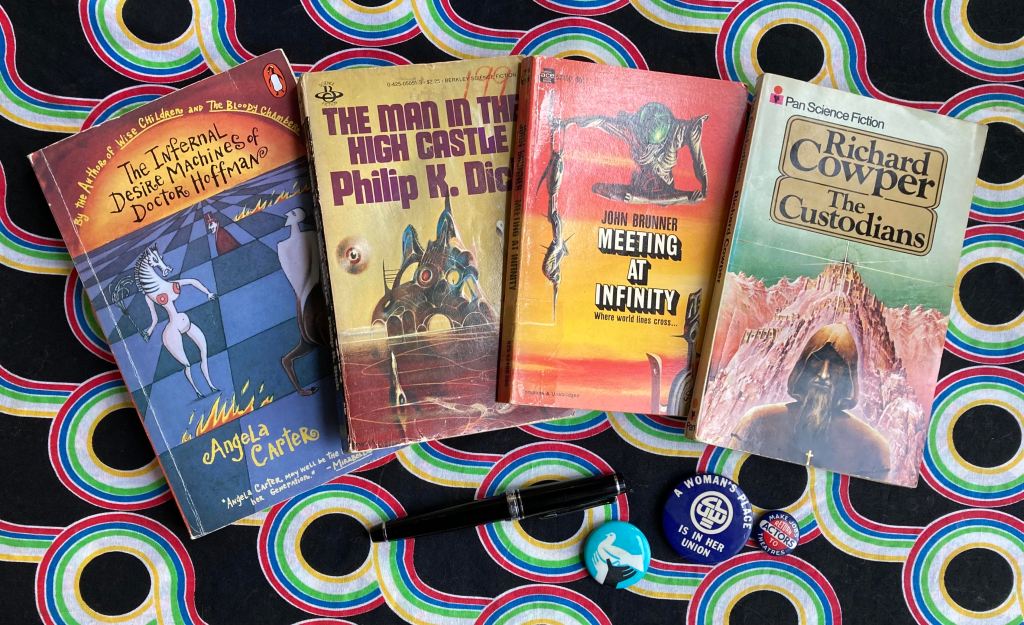
A selection of read volumes from my shelves
What pre-1985 science fiction are you reading or planning to read next month? Here’s the May installment of this column.
In my interview with Jaroslav Olša, Jr. about his book Dreaming of Autonomous Vehicles: Miles (Miroslav) J. Breuer: Czech-American Writer and the Birth of Science Fiction (2025), an interesting methodological question jumped out to me: what is the role of more ephemeral publications outside of Hugo Gernsback in the early history of genre? A bit of context: Miles J. Breuer also wrote in Czech. He published stories in Czech-language publications aimed at the immigrant community far earlier than their re-written versions appeared in Gernsback’s Amazing. In addition, he published in various medical journals (that occasionally ran SF) and university publications. As Olša points out in the interview, it obviously depends on the questions asked by the historian — and these publications had small audiences that make it hard to ascertain “influence” or “inspiration” for later authors. Food for thought.
Before we get to the photograph above and the curated birthdays, let me know what pre-1985 SF you’re currently reading or planning to read!
The Photograph (with links to reviews and brief thoughts)
- Angela Carter’s The Infernal Desire Machines of Doctor Hoffman (1972) is my favorite of her novels I’ve read so far. I was unable to write a review. I managed to write a review of Heroes & Villains (1969).
- Philip K. Dick’s The Man in the High Castle (1962). Like most of Dick’s best-known works, read before I started my site. I am an unabashed fan of novels-within-novels.
- John Brunner’s Meeting at Infinity (1961). My review. His best pre-The Whole Man (1964) novel?
- Richard Cowper’s The Custodians and Other Stories (1976). My review. SF redolent with medievalism–for good or bad. Interesting, if flawed, stuff…
What am I writing about?
I posted a wonderful interview with Jaroslav Olša, Jr. about his brand-new book, Dreaming of Autonomous Vehicles: Miles (Miroslav) J. Breuer: Czech-American Writer and the Birth of Science Fiction (2025). In the book, he covers the life and career of Miles (Miroslav) J. Breuer (1889-1945), the first SF author to regularly write original stories for Hugo Gernsback’s Amazing. Breuer’s career also provides a fascinating window into the literary and cultural world of immigrants in late 19th and early 20th century America. Check it out if you haven’t already!
My big news of the summer: the start of my Galaxy Science Fiction magazine read-through (volumes under H. L. Gold’s editorial byeline). I should have another post up in the series later this week. I also wrote short reviews of two novels: The Company of Glory (1974, novelized 1975) and Harold Mead’s Mary’s Country (1957).
What am I reading?
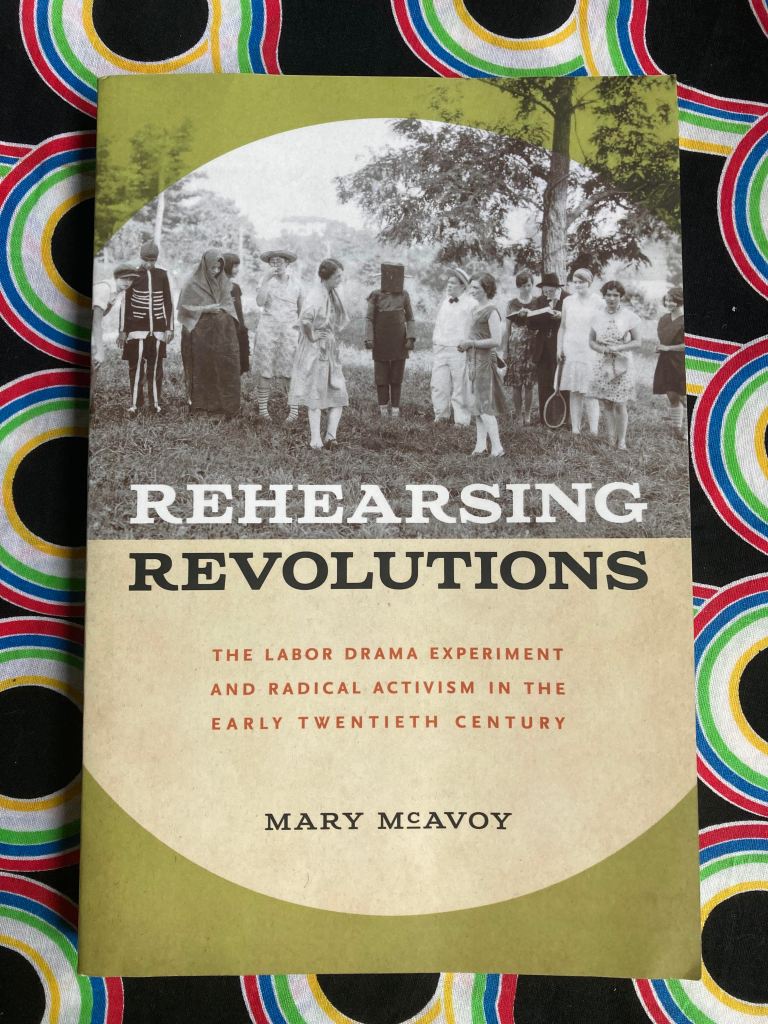
As always, I’ll keep my current SF reads under wraps (less pressure) and focus on the history. As readers should know, I’ve develop a rabid obsession with various forms of leftist radicalism in the United States. I’ve engaged in a book-buying binge of volumes that intersect with theater. McAvoy’s volumes, so far, is absolutely transfixing.. She explores the emergence of labor/union-oriented colleges across the United States and their drama programs between the two world wars. Fascinating!
A Curated List of SF Birthdays from the Last Two Weeks [names link to The Internet Speculative Fiction Database for bibliographical info]
June 15th: J. F. Bone (1916-2006).
June 15th: Artist Neal Adams (1941-2022). Best known for his Tarzan covers.
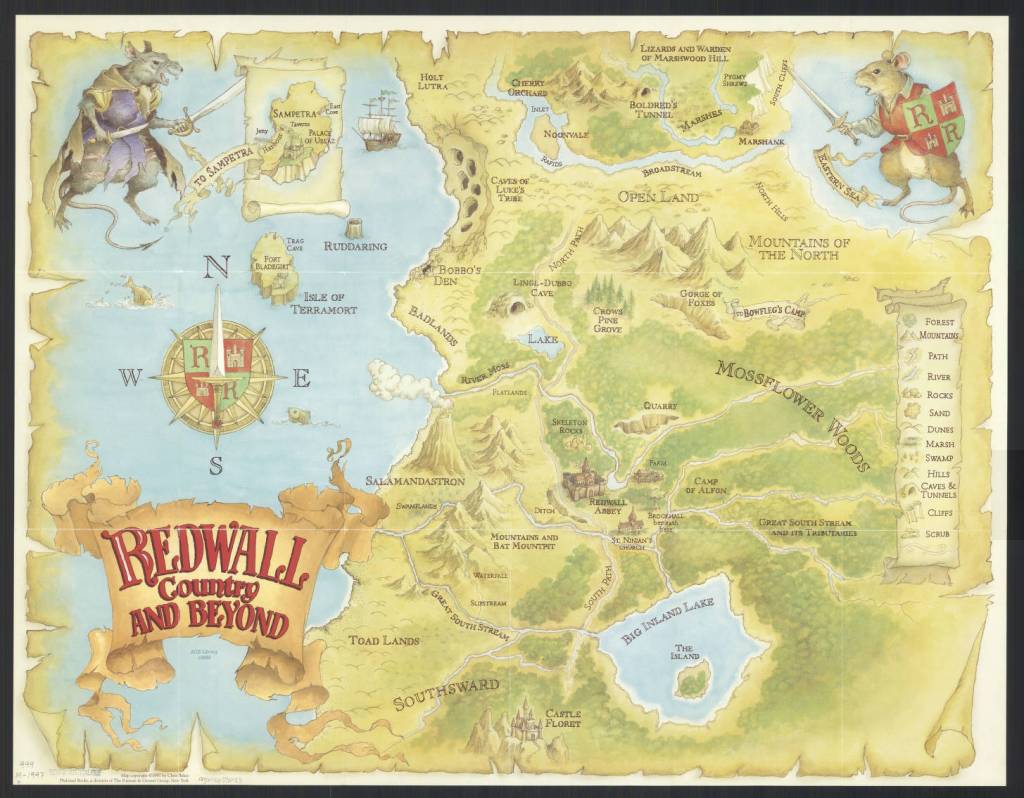
Map of the world of Redwall
June 15th: Brian Jacques (1939-2011). Yes, not science fiction…. but… I owe so much to Brian Jacques. His Redwall series single-handedly made be obsessed with reading. I read the first 12 or so volumes multiple times — and the first 5 at least six times each. I remember vividly the night my mother started reading Redwall (1986) to my sister and I. After my sister drived off to sleep, I snuck down from the bunkbed, turned on my personal light, and read the rest of the novel that night.
June 17th: Wallace Wood (1927-1981).
June 17th: John Hersey (1914-1993). Best known for his non-fiction work Hiroshima (1946), Hersey also wrote three SFF volumes. I read and enjoyed his overpopulation themed novel My Petition for More Space (1974). I acquired his satire of the National Defense Education Act (1968) novel The Child Buyer (1960).
June 17th: Garen Drussaï (1916-2009). She wrote five science fiction stories in the mid-50s, including her “consumer hell” story “Woman’s Work” (1956) that I must finally get around to reading.
June 17th: Dean Ing (1931-2020).
June 17th: Tim and Steve Quay (1947-) (The Brothers Quay). Before their brilliant short films, they created covers!
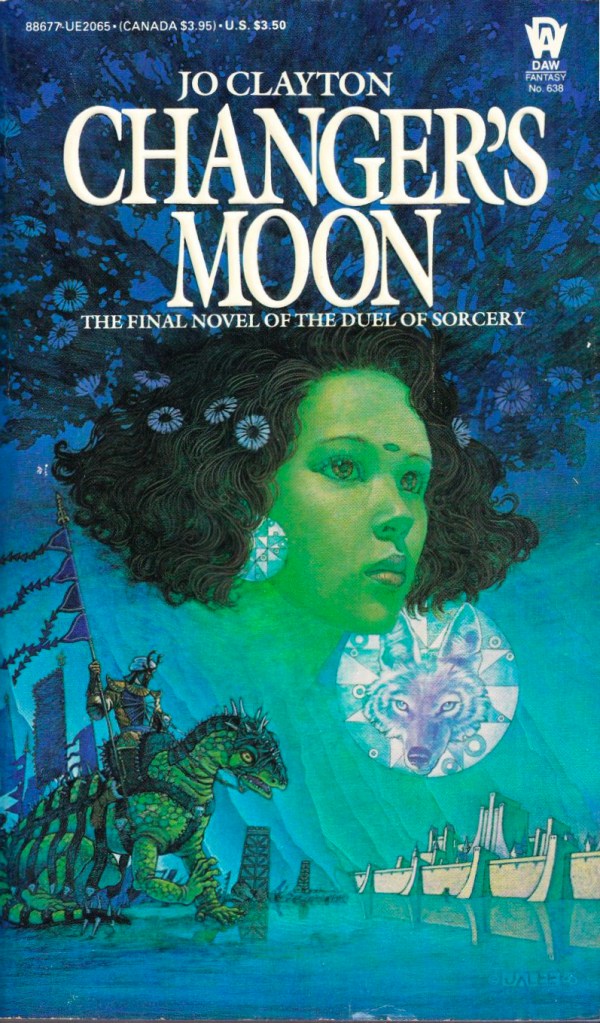
Jody A. Lee’s cover for the 1st edition of Jo Clayton’s Changer’s Moon (1985)
June 18th: Artist Jody A. Lee (1958-).
June 18th: Roger Ebert (1942-2013). Ebert, a famous film-reviewer, also published two science fiction short stories in 1972.
June 19th: Mark Adlard (1932-). I reviewed the first volume–Interface (1971)–in his Tcity trilogy back in 2015.
June 19th: Brian Ball (1932-2020). A slick pulp-SF author, if that is your thing. I reviewed Singularity Station (1973) in 2013.
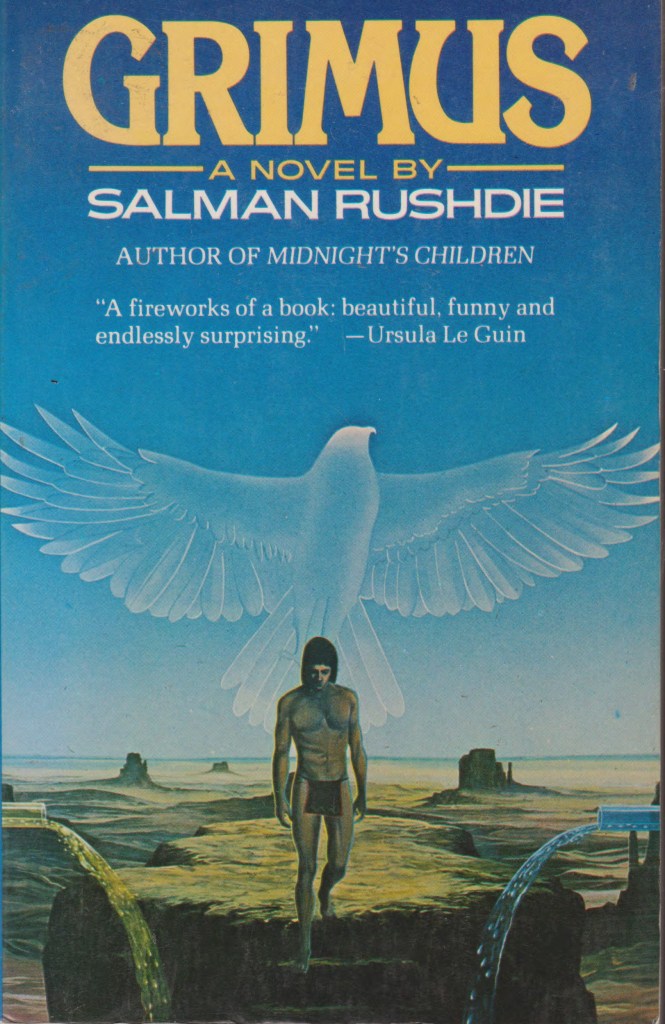
Peter Goodfellow’s cover for the 1977 edition
June 19th: Salman Rushdie (1947-). I have my eyes on his first SF novel Grimus (1975) (above).
June 20th: Pamela Zoline (1941-). I love the rightly celebrated “The Heat Death of the Universe” (1967) and wish she wrote more than the handful of short stories (and an unpublished novel that I would love to find).
June 21st: Cleve Cartmill (1908-1964). Best known for the controversy over “Deadline” (1944) “which described an atomic bomb a year before one was ever dropped, which the government attempted to suppress.”
June 21st: David J. Skal (1952-2024)
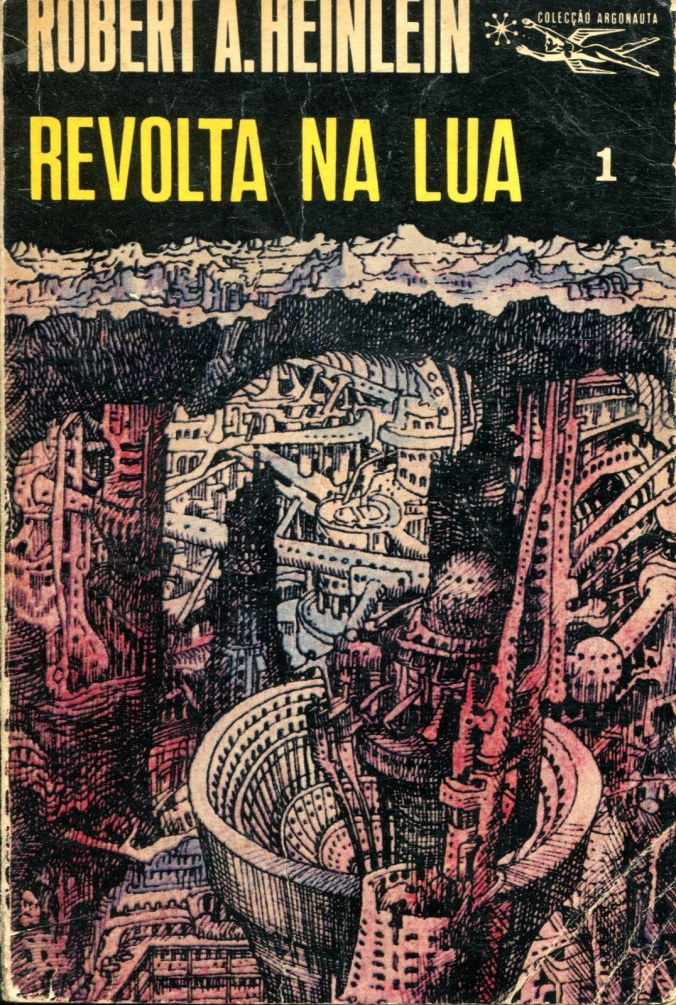
Lima de Freitas’ cover for the 1967 edition of vol. 1 of Robert A. Heinlein’s The Moon is a Harsh Mistress (1965)
June 22nd: Lima de Freitas (1927-1998). One of my top 5 science fiction artists — I love his line work.
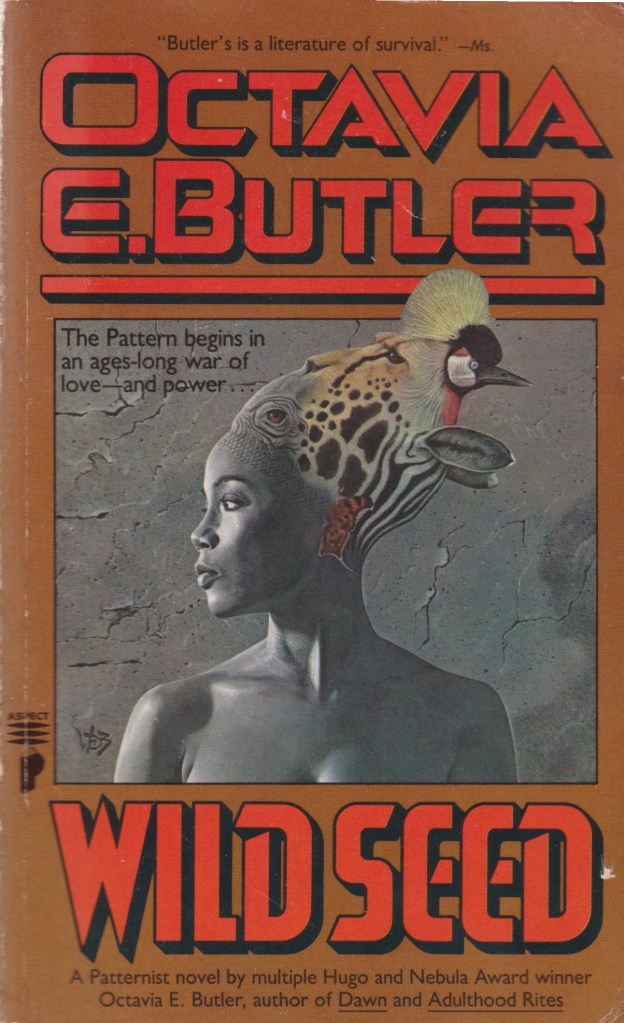
Wayne Barlow’s cover for the 1988 edition of Wild Seed (1980)
June 22nd: Octavia E. Butler (1947-2006). I’ve reviewed Dawn (1987) and Mind of My Mind (1977). My favorite remains Kindred (1979).
June 23rd: Michael Shaara (1928-1988).
June 23rd: Artist Paul Orban (1896-1974).
June 23rd: Artist Alan Craddock (1956-).
June 25th: George Orwell (1903-1950). He has to go on the list!
June 25th: Charles Sheffield (1935-2002). His SF isn’t to my taste — more “hard” SF with lots of scientific details and background. I attempted to review Sight of Proteus (1978).
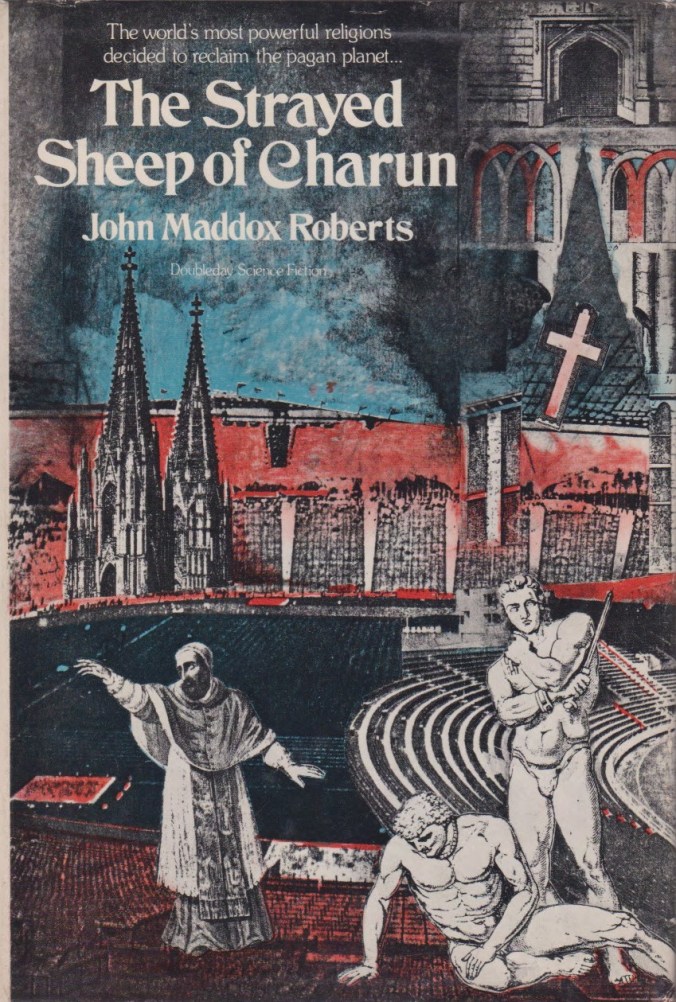
Michael Flanagan’s cover for the 1st edition of John Maddox Roberts’ The Strayed Sheep of Charun (1977)
June 25th: John Maddox Roberts (1947-2024).
June 26th: Artist Milton Glaser (1929-2020).
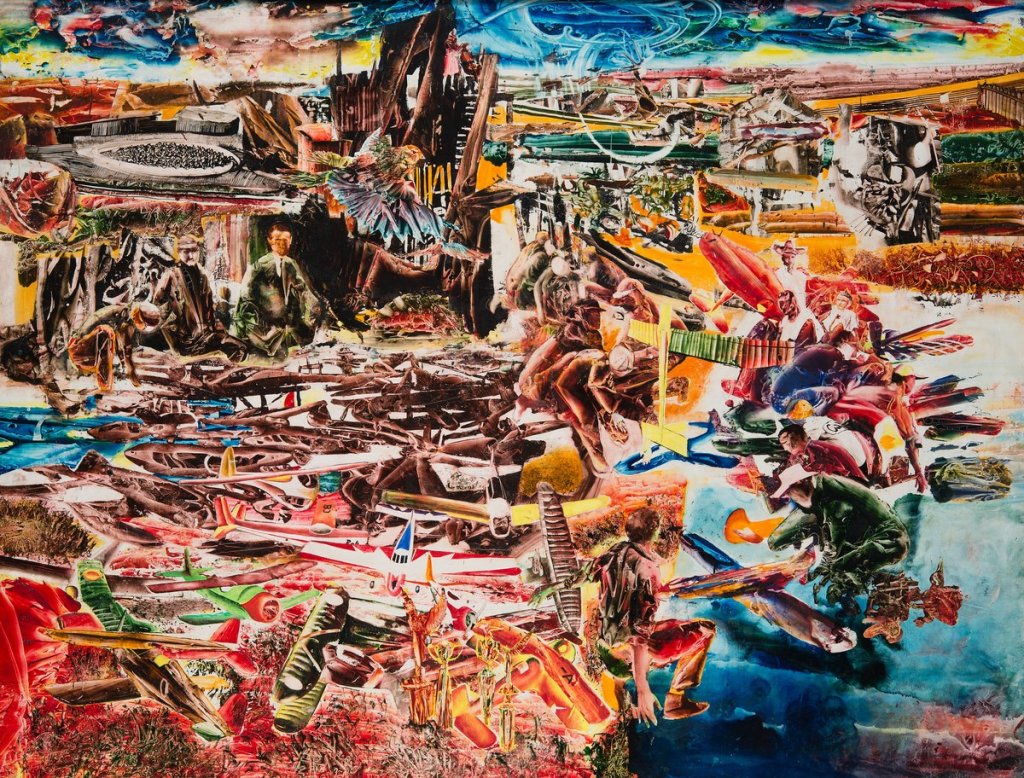
Tibor Csernus’ Modellers (1963)
June 27th: Artist Tibor Csernus (1927-2007). Another one of my favorite SF artists — mostly for French editions. The Hungarian is the master of texture and integrating surreal experimentation in combination with more representative SF art.
June 28th: Another wonderful cover artists for French presses: Philippe Druillet (1944-).
June 28th: Robert Asprin (1946-2008).
June 29th: Brian Herbert (1947-).
For book reviews consult the INDEX
For cover art posts consult the INDEX
For TV and film reviews consult the INDEX
 Science Fiction and Other Suspect Ruminations
I am finally reading Kavan’s “Ice” and it is living up to the praise it has received.
It’s a good one! I reviewed it years ago. https://sciencefictionruminations.com/2015/02/01/book-review-ice-anna-kavan-1967/
The review helped incentivize my choice (my tbr pile appears to be insurmountable, but I remain persistent in my efforts) 🙂
Good good! I know the feeling. I have close to 1.5k unread SF books… probably… maybe more.
Between the ones I own and the very good public library here, I am always buried in books. I am looking over my reading for 2025 and the list includes 17 novels, 10 biographies/memoirs, 5 poetry collections and several more including history, science and graphic novels. It’s been a pretty good year, so far, with several works quite excellent.
I’ve read mostly history. But yes, a good year reading so far for me. Maybe 40 or so volumes at this point. I also read a lot of digitized individual stories and articles…
I did read her story collection Machines in the Head, published by NYRB in February, so that also whetted an appetite for more of her work. Her work, in terms of tone, reminds me of other British writers like Barbara Comyns and Sylvia Townshend Warner.
Ice is the only Kavan I’ve read.
An amazing book.
I second that.
Yevgeny Zamyatin’s “We”. I think that it’s internal narrative is weak and unclear.
Hello Richard, I thoroughly enjoyed We (albeit I read it two decades ago probably). Can’t say I agree, from what I remember, with your assessment.
I liked bits of it, but it didn’t seem to have a strong thread. It’s influence is important though. It probably should be read more than once.
Now that I think about it, I can’t say many of my favorite novels have a strong internal narrative thread!
It was the way it was told from an inner viewpoint though. It didn’t seem to have a clear storyline.
I’m dredging up memories from decades ago unfortunately. But I am frequently a fan of “inner viewpoints” and stories that aren’t entirely propelled by action or direct narrative impulse. I distinctly remember all the similarities with Orwell’s 1984 (1949), and of course Orwell’s audacity to accuse Huxley of plagiarizing We when his novel is far more similar…
I really like We. I guess it can seem messy and unclear compared to 1984 or Brave New World, but that’s part of what I find refreshing about it – we’re so used to dystopias being the standard “serious litterature” SF – realistic and more or less recogniseable -, and We, despite inventing much of what is used in later dystopias, presents a much stranger world, with an almost dreamlike vibe.
I agree with you on these points — the dreamlike vibe was its appeal. The descent into dystopia or the experience of dystopia seems like a form of illogical irreality (I say this from my current experience as an American witnessing the complete collapse of the state that cares for its citizens for the benefit of the wealthy).
Yes, one thing I really loved about it was how for most of the book it almost seemed like the OneState could actually be benign, a bizarre fantasy shared by (almost) everybody. Only at the very end, when the rebellion is crushed, do the dream break and the violence and brutality behind it all shows itself clearly.
Yeah, good observation.
I’m in the middle of my Hugo reading, but hope to get to a nice collection of Charles Harness works (An Ornament to His Profession) in August.
I haven’t read anything by Harness. I have his collection The Rose (1966).
The Paradox Men is also quite good, and I’ve been meaning to read The Ring of Ritornel for a while.
I am pretty sure I own both.
I’ve recently finished Empire Star. One of the few Delany books I’d not read.
I enjoyed this novella immensely.
It was right up there with Nova for me – the naivety of the protagonist/main character was great. I never tire of Delany’s epic quest for experience narratives.
It’s recommended to be read before Babel-17 which I read decades ago – so I’ll get on to rereading that soon.
Hello Andrew,
I can’t say I remember much about Empire Star. It was almost two decades ago though… I have much stronger memories of Nova (which I read twice) and Babel-17 — both of which I thoroughly enjoyed.
It’s excellent. The chronology is like a Moebius strip. Everyone the protagonist meets influences him because they were themselves influenced by him.
I am going to try hard to reread Dhalgren in July.
Brave man. I should too. But I won’t. Hah. Working on my Galaxy magazine project at the moment.
Just finished Izumi Suzuki’s “Terminal Boredom” and have moved on to “Hit Parade of Tears”, honestly a bit stunned that something like this even existed at the time. The writing is very compact, sharp, funny. Plenty of science fiction tropes and themes but social/psychological relationships are always foregrounded. Great stuff.
Also still slowly moving through a re-read of the Gormenghast novels (only the last of which has any real sf elements), I expect this will drag on for months lol
The Izumi Suzuki stories sound great. I’ll put them on my “to acquire” list. I thoroughly enjoyed the first volume of the Gormenghast series (the general bleak vibe, the endless rituals, the decay…). Never got around to reading the second.
Just finished the second Pern novel, Dragonquest, by Anne McCaffrey. They’re better than I expected, but the pantomime villainess is basically delivers halfway through the story, and the jeopardy suffered by the main characters is unconvincing because you know they’ll survive…
I loved them as a kid. I even read some she co-wrote with her son. Because of the happy nostalgia they generate, I have no plans on returning to them. I wanted to be bonded to a dragon! haha.
I just finished The Infernal Desire Machines of Doctor Hoffman, so good timing with your highlighting it here!
I liked it a lot, more than The Magic Toyshop, but not as much as The Passion of New Eve, which it resembled more.
There were moments where it began to suffer from the same issue I had with The Hole in the Zero, ie a fascinating main idea almost being reduced to a not terribly convincing device for making up all sorts of more or less random stuff, but the ending made up for it.
I have a copy of The Passion of New Eve. I look forward to reading that one. I admit The Infernal Desire Machines is not a very cohesive novel, but the first section that describes the city is near perfect….
Yes, the first and last chapters were the best IMO – but there were many other great parts too, and I don’t necessarily have a problem with it not being cohesive, it was more that parts of it seemed sort of tacked on without adding that much. Especially the chapter with the Centaurs seemed a bit arbitrary.
But all in all a very good one, and also interesting for me given that I read a lot of E.T.A. Hoffmann last year.
I can’t say I remember the centaurs. I do remember the evocative descriptions of the bizarre and disturbing dioramas.
I just recently picked up a copy of The Passion of New Eve to reread, coincidentally.
Let me know what you think!
I’m happy to have found your site.. Awesome work! I started reading SF in January of this year. It’s responsible for getting me back into reading regularly and it’s become a bit of an obsession to boot.
I just finished Bob Shaw’s Other Days, Other Eyes….the other day. It was interesting how he would include very short tangential story bits (involving different characters) sprinkled in-between the main story chapters to expand on the Slow Glass plot. I wonder if it’s a fix-up novel? Anyrate, I’ve enjoyed what I’ve read from Bob so far. He does a pretty durn good job of taking new tech and developing it’s implications, it’s consequences…
I immediately dove into Galouye’s Dark Universe and now that’s got me hooked.
Just wanted to say hello,
Good Luck with the Galaxy Mag project!
Hello! Thanks for stopping by.
You are right: Bob Shaw’s Other Days, Other Eyes (1972) is absolutely a fix-up. Here is the isfdb.org listing that gives the rundown of the stories. https://www.isfdb.org/cgi-bin/title.cgi?1428
I have reviewed the first section: “Light of Other Days” (1966). I also thought it was top notch!
Galouye’s Dark Universe (1961) is one of the very first novels I reviewed on my site. The review is very very very old… be aware. Hah. I adored it.
Thanks again for stopping by!
please disregard the silly “LoudlyLegendary#…” profile tag. I do not endorse
ive never commented on WordPress blog before and idk where that profile name has come from. Maybe i was automatically tagged something random when I posted just now. Gonna try to change it. Cheers
No worries. You’re good.