Guest Post: Three SF Short Stories Pre-1969 by Women Authors: “Vintage Season” (1946), C.L. Moore and Henry Kuttner, “The Snowball Effect” (1952), Katherine Maclean, “The Painter of Dead Women” (1910), Edna Underwood

The erudite and prolific Jesse provides the fourth guest post in my SF Short Stories by Women Writers pre-1969 series (original announcement and list of earlier posts). I recommend investigating the archives over at his blog Speculiction, which covers both vintage and new SF ranging from Aliya Whiteley’s The Beauty (2014) to John Brunner’s The Jagged Orbit (1969).

His post focuses on three stories from different authors including one of the best known from the pre-1969 era: the writing pair of C.L. Moore and Henry Kuttner, Katherine MacLean, and Edna Underwood. As no discussion of women in pre-1969 SF would be complete without C.L. Moore, and it is often impossible to discern which stories she wrote individually and which she wrote with her husband Henry Kuttner, I gave the go ahead for Jesse to review one of their best known co-written short stories.

I hope you’ll track them down!

_________________________________________________________________

galaxy_195209

(Katherine Maclean’s “The Snowball Effect” first appeared in the September 1952 issue of Galaxy, cover: Jack Coggins)

Review of “Vintage Season” (1945) by C.L. Moore and Henry Kuttner, “The Snowball Effect” (1952) by Katherine MacLean, and “The Painter of Dead Women” (1910) by Edna Underwood

By Jesse

Gender in science fiction is surely one of the top three subjects in online genre discussion these days.  The objectification of women, the roles of women in story, the lack of award recognition for female writers, the negative Continue reading

Guest Post Series Announcement: SF Short Stories by Women Writers pre-1969

146532

(Richard Powers’ cover for the 1963 edition of A Handful of Time (1963), Rosel George Brown)

The time has come for a new Guest Post series on SF Short Stories by Women Writers pre-1969. My reasons are two-fold: 1) to showcase a deserving and fascinating topic in line with my goal to feature lesser known SF from a range of viewpoints and traditions 2) to feature posts from reviewers in the vintage SF blogsphere and beyond (in any combination of the following) that attempt to move past standard lists and grand narratives of canon, tackle fiction from evidence-based analytical and academic perspectives, or are simply darn good writers whose sites I cannot help but return to compulsively.

Why pre-1969? Although most endpoints are arbitrary in nature, 1969 saw the publication of Ursula Le Guin’s magisterial The Left Hand of Darkness. Considered a watershed moment in the history of women writers as it was the first to win a Hugo Award for best novel, Le Guin among many others were part of a rich (albeit oft suppressed and ignored) genealogy of women SF authors reaching back to Mary Shelly. My focus on short stories will allow exploration of many authors who did not write novels, whose novels overshadow their short fiction, and those whose rich body of early work focused predominately on the short form.

Thus I have rounded up my normal suspects along with new voices. The first guest post series covered the work of Michael Bishop and the second Kate Wilhelm.

Topics in the queue: Robot therapists, French and Soviet SF, a range of speculative fictions from the 19th Continue reading

Updates: Recent Science Fiction Acquisitions No. CXLIII (Two themed anthologies: Election Day 2084 and TV: 2000 + Harrison + Gary)

Two themed anthologies—one in “honor” of the election [*cough* I mean, well, I won’t go all political] year cycle…  Another on one of my favorite SF themes, television of the future!

That said, both Asimov edited collections (from the 80s but with stories from only earlier decades) have a serious fault: out of the combined 35 stories there is not a single story by a woman author.  I’ve read a vast number of 60s/70s collections which do not fall into this trap…. Orbit 1 (1966) almost manages gender parity!  I can think of numerous stories by women authors that fit both themes.  For example, Kit Reed’s wonderful “At Central” (1967) fits the TV anthology!

A hard to find for cheap early M. John Harrison novel…. Unfortunately I only found a much uglier edition that the one I show below as the rest were out of my price range….

And, a complete shot in the dark—a SF novel by the mainstream French/Lithuanian novelist/screenwriter Romain Gary, the author of White Dog (1970)..

As always, I’d love to hear your thoughts + comments.

1. The Committed Men, M. John Harrison (1971)

THCMMTTDMB1971-1

(Chris Yates’ cover for the 1971 edition) Continue reading

Book Review: Three Worlds of Futurity, Margaret St. Clair (1964)

P1080582

(Jack Gaughan’s cover for the 1964 edition)

3/5 (collated rating: Average)

Margaret St. Clair (1911-1995) was a mainstay of the major pulp magazines and maintained a prolific career from 1946 to the late 60s (between the 70s and early 80s she  produced only one novel and a handful of stories).  Previously, I found myself disenchanted with her work as I struggled through the Wicca-inspired ramblings of Sign of the Labrys (1963).  However, I thought I would give her short fiction a try and snagged a copy of the 1964 Ace Double #M-105 that contained her collection Three Worlds of Futurity (1964) and her best known novel Message from the Eocene (1964) (which I might read sometime in the future).

Three Worlds of Futurity contains five stories from her most prolific period—the late 40s-early 60s.  Although the majority do not rise above their fellow pulp ilk, “The Rages” (variant title “The Rations of Tantalus” 1954, revised 1964) shows a measured and incisive feminist inspired vision and the unusual subject matter of “Roberta” (1962) suggests St. Clair’s willingness to tackle controversial subjects.  Most of the stories contain evocative imagery although the delivery rarely transfixes.  Also, although most of the main characters in St. Clair’s stories are men, women scientists and pilots (etc) populate the pages.  I suspect Continue reading

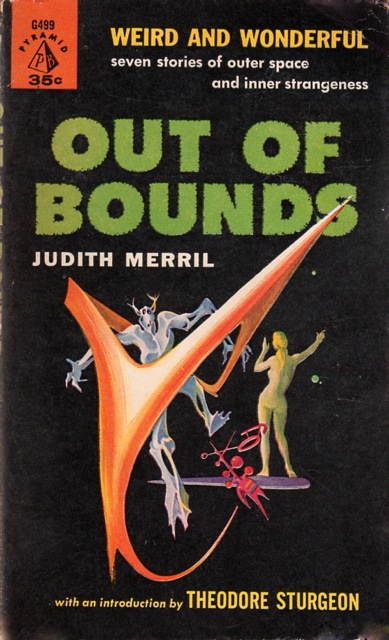
Book Review: Out of Bounds, Judith Merril (1960)

OTFBNDS1960

(Art Sussman’s cover for the 1960 edition)

3.25/5 (collated rating: Vaguely Good)

I have long been a fan of both Judith Merril’s fiction and edited volumes.   The eponymous novella in the collection Daughters of Earth (1968) is one of more delightful visions from the 1950s I have encountered. Merril reframes biblical patrilineal genealogy as matrilineal–i.e. humankind’s conquest of space is traced via the female descendants of an august progenitor.  The story is brilliant in part due to a remarkable metafictional twist, the story itself is compiled from historical documents to serve as an instructional template for future generations of women.  Despite substantial editorial control that forced Merril to include a rather hokey plot on two hokey planets, the story remains memorable for the well crafted feminist Continue reading

A question for my fellow SF fans: Which SF writer without a single author collection published within the last 10 years should receive a reprint?

THDPFNCY401962 FRFLDNDTHB1981

On twitter [my account here — please follow!  I post interesting things!] I posed the following question:

Which SF author—for the purposes of this site’s focus, an author starting pre-1980—deserves a new (or reprint) single author collection?

GUIDELINES (please read): Said author cannot have a single author collection published within the last 10 years (you can fudge this a bit).   It also should be noted that many eBooks aren’t available in the United States (SF Gateway for example).  If the recent eBook edition isn’t available in the US, I guess the author fits the bill (*cough* — John Sladek).

XNGNSS4D1969Note: If you are thinking about doing some checking before you make your choice (see guidelines) I recommend using isfdb.org as it has mostly up to date publication histories for all but self-published authors.

My vote: Miriam Allen deFord (active from — SF Encyclopedia LINK

Published collections: Xenogenesis (1969) and Elsewhere, Elsewhen, Elsehow (1971)

Reason: Miriam Allen deFord (1888-1975) was one of the major voices in SF magazines from 1946 – 1978.   She never made the transition to novels and thus might have lost some readership as a result.  The stories in Xenogenesis (1969) shows an often radical voice right from her first story in 1946.  Although they might not be as polished as some of her more Continue reading

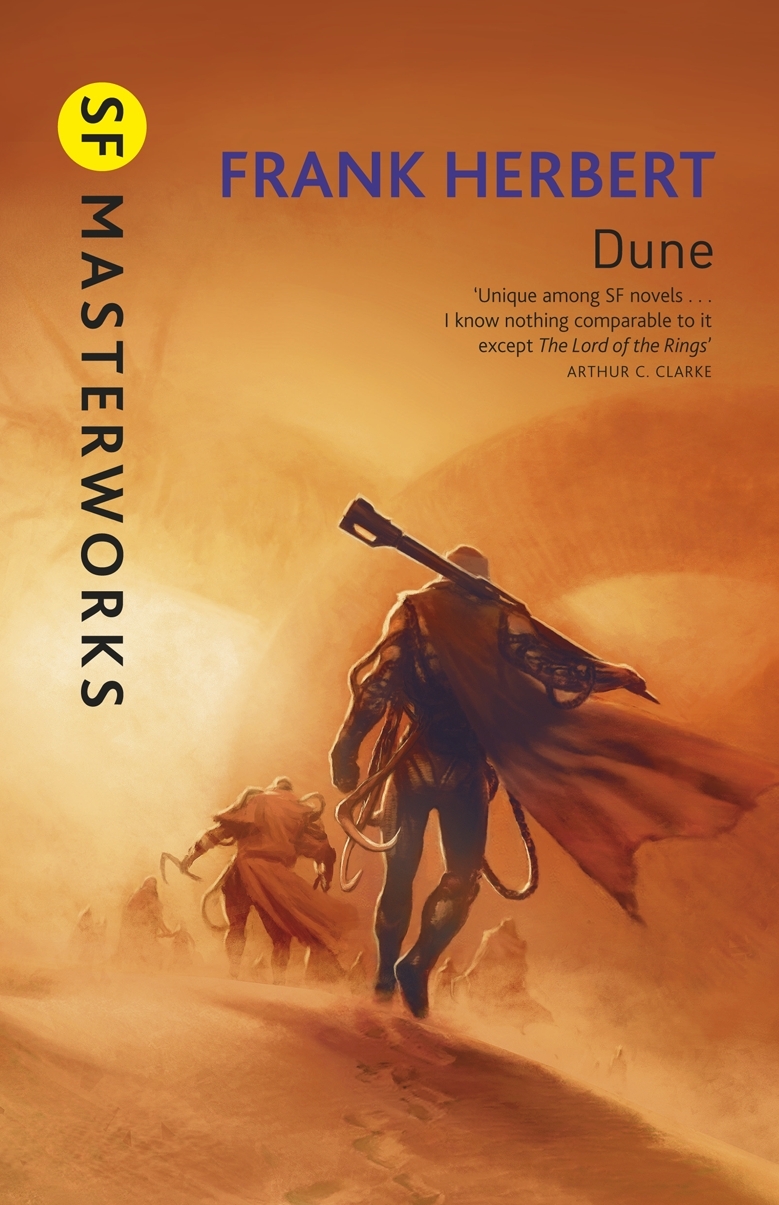
Updates: My Top 10 SF works (pre-1980) for inclusion in the Gollancz Masterwork series

Long-Tomorrow dune

The Gollancz Masterwork series [list] ranges from famous novels such as Ursula Le Guin’s The Left Hand of Darkness (1969) to lesser known short story collections such as The Caltraps of Time (1968) by David I. Masson.  The Masterwork series has the power to introduce readers to the canonical “best of SF” and works that should be considered classics.  Many of the second group have not seen print for decades.  Although I have some qualms about certain inclusions, I was genuinely blown away that they recently chose one of my favorite novels The Continuous Katherine Mortenhoe (variant title: The Unsleeping Eye) (1973) by D. G. Compton—an underread and unjustly forgotten author.

Over the course of the next week or so a handful of my fellow SF bloggers (most of whom have a focus on earlier SF) will release lists on their sites of SF they would like to see featured by Gollancz.  I have not given them any guidelines so the lists should be varied and hopefully will generate some discussion.  I highly recommend you head over to their sites (I will post the links as they come in) and comment.

Thoughts + comments are always welcome (as well as your own lists!).

More “What to Include in the Gollancz Masterwork Series” Lists (blog friends)

Chris over at Battered, Tattered, Yellowed, and Creased 

Megan over at From Couch to Moon

2theD over at Potpourri of Science Fiction Literature

Ian Sales over at It Doesn’t Have to be Right…

Jesse over at Speculiction…

2theD over at Tongues of Speculation (his votes regarding translated SF)

Martin over at Martin’s Booklog

My guidelines for inclusion

1. My frequent readers know that I prefer (passionately) SF from the 50s-70s Continue reading

Updates: Recent Science Fiction Acquisitions No. CXX (Harness + Dickson + Haldeman + Brunner)

An intriguing range of SF novels…  A few thrift store pickups and a few sent by my father.  Excited about the John Haldeman fix-up novel All My Sins Remembered (1977).  Won’t read the Brunner for a long long time—but I’m a Brunner completists so I buy his books on sight if I don’t have a copy.

Still haven’t read anything by Charles L. Harness….  Not sure about this 80s rewrite of his late 40s serialized novel.  We shall see.

Thoughts?

1. All My Sins Remembered, John Haldeman (1977)

(Paul Stinson’s cover for the 1977 edition) Continue reading

Updates: Recent Science Fiction Acquisitions N. CXIII (Dangerous Visions + Holdstock + Stewart + Joseph)

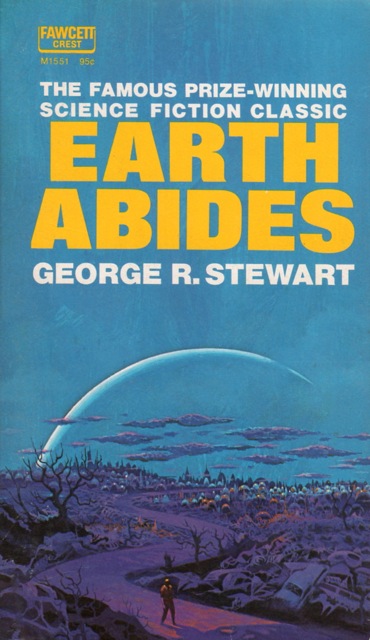
Recent travels yield wonderful SF hauls—including one of the most famous post-apocalyptical novels of all time, George R. Stewart’s Earth Abides (1949).  Thankfully my edition is graced with a gorgeous Lehr landscape—strange forms in the distances, crushed cars in the foreground.

The most famous SF anthology of all times—Ellison’s Dangerous Visions (1967).  As a proponent of the New Wave movement it’s about time that I snagged a copy (disclaimer before the cries of derision: I have already read numerous stories contained in the anthology).

An early Holdstock novel (I might get to that one soon)….

And a shot in the dark—M. K. Joseph’s The Hole in the Zero (1967).  John Clute (the noted SF critic) describes it such on SF Encyclopedia: it “begins as an apparently typical Space-Opera adventure into further dimensions at the edge of the Universe, but quickly reveals itself as a linguistically brilliant, complex exploration of the nature of the four personalities involved as they begin out of their own resources to shape the low-probability regions into which they have tumbled. Ultimately the novel takes on allegorical overtones. As an examination of the metaphorical potentials of sf language and subject matter, it is a significant contribution to the field.”  Sounds intriguing to me…

Thoughts?

1. Earth Abides, George R. Stewart (1949)

(Paul Lehr’s cover for the 1974 edition) Continue reading