Updates: Recent Science Fiction Acquisitions No. CXCII (Sturgeon + Turner + Schenck + Best of 1973 Anthology)

1. I seldom buy duplicate editions. I originally read Sturgeon’s masterpiece as a teen and I’m unsure where my original 70s edition with a Bob Pepper cover ran off to…. And this perfect condition 1960 edition has glorious Richard Powers art!

2. George Turner—an author I know next to nothing about. I’ve already read 75 pages of his first novel and am absolutely entranced.

3. Hilbert Schenck—another author who is new to me. He published primarily in the early 80s and snagged a few Nebula nominations for his short fiction. His second novel proved to be a dud (I’ll have a review up soon).

4. Why are you buying another Donald A. Wollheim Best Of collection when you’re firmly in the Terry Carr camp of Best Of anthologies? Good question.

That said, I recently reviewed The 1972 Annual World’s Best SF (1972) and it was solid.

Note 1: All images are hi-res scans of my personal copies — click to expand.

Note 2: A diligent Twitter follower indicated that the 1984 edition cover of the Turner novel is Tony Roberts’ work.

Thoughts? Comments? Tangents? All are welcome.

_

1. More than Human, Theodore Sturgeon (1953)
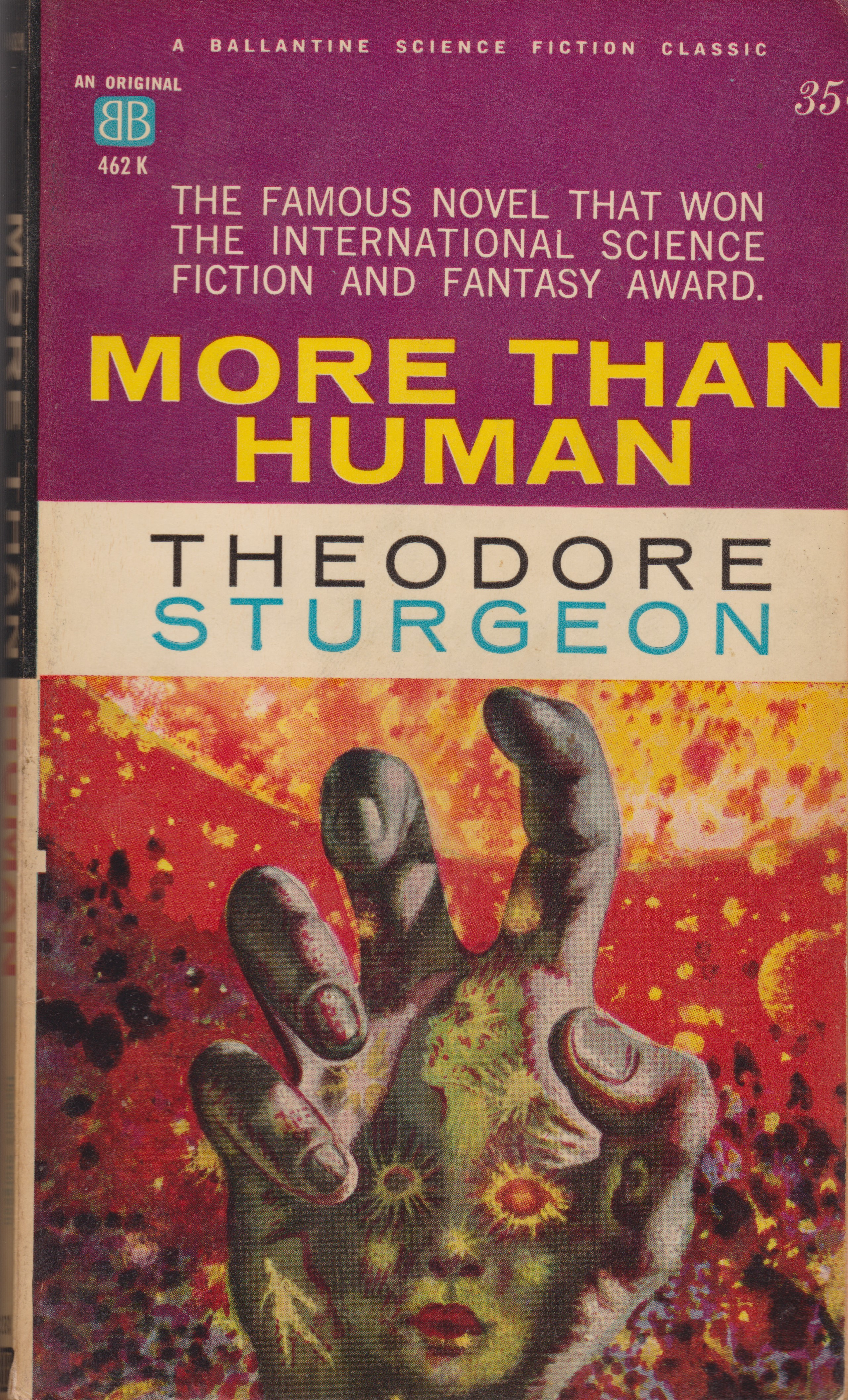
(Richard Powers’ cover for the 1960 edition) Continue reading →
Updates: Recent Science Fiction Acquisitions No. CXCI (Bob Shaw + James Morrow + Richard E. Peck + Anthology of French SF)

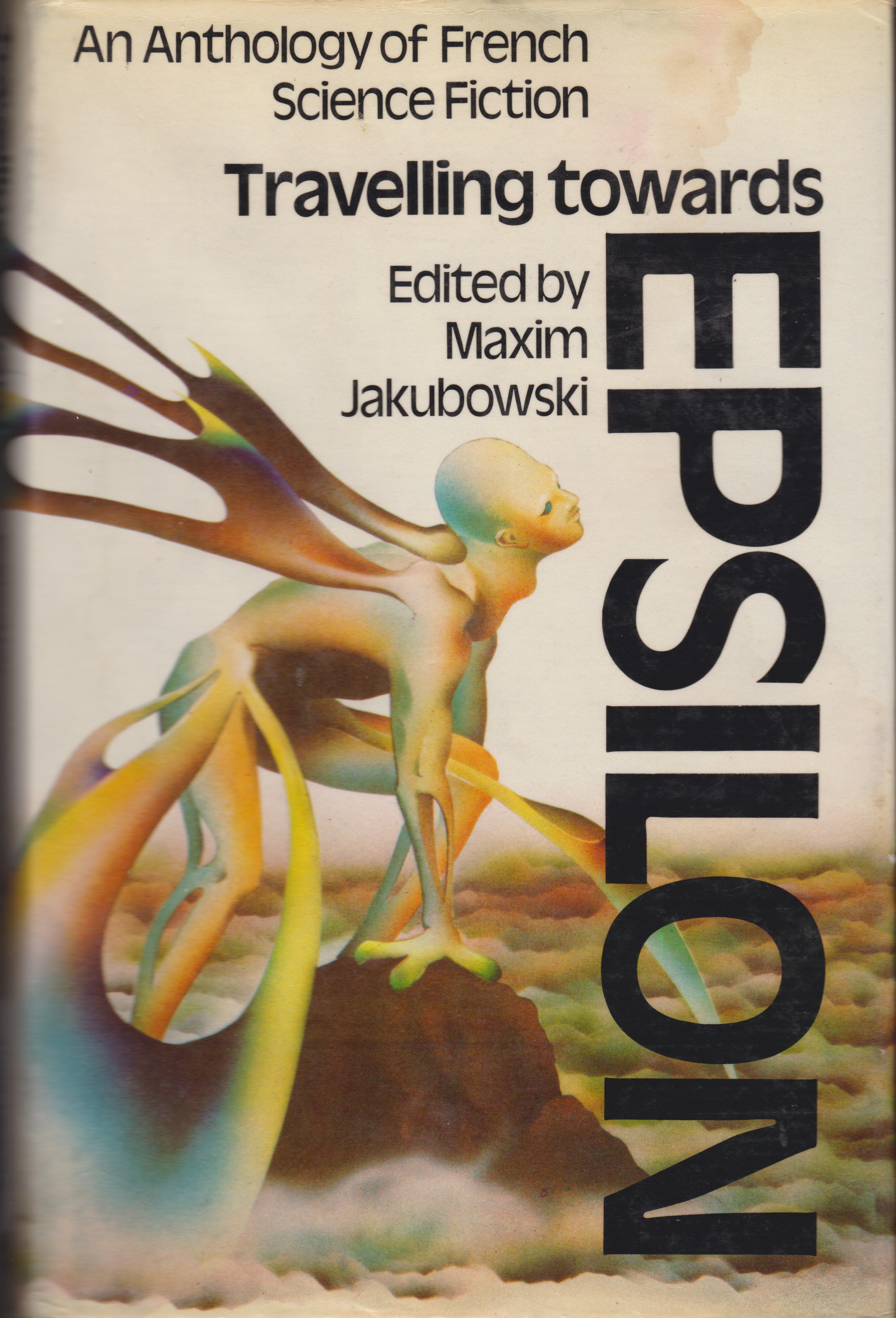
1. An anthology of (primarily) 70s French SF? Yes! New authors (at least to me). New adventures. New perspectives.

2. I’ve never read James Morrow… I might as well start with his first SF novel.

3. Bob Shaw’s “Light of Other Days” (1966) is a brilliant piece of short fiction. And I finally have the novel version. After the relentlessly average Shaw novels I’ve read, I look forward to his acknowledged best.

My other Bob Shaw reviews:

Ground Zero Man (variant title: The Peace Machine) (1971)

One Million Tomorrows (variant title:1 Million Tomorrows) (1971)

The Two-Timers (1968)

4. I bought this virtually unknown Doubleday edition due to the art. First class art. Check out my  exploration of her work: Collage and Mechanism: Anita Siegel’s Art for Doubleday Science Fiction.

Wait, there’s one other reason–I’m slowly collating titles for an “academia in SF” list and I might as well read a few of them.

Thoughts and comments are always welcome!

Note: Hi-res scans are of my personal copies.

_

1. Travelling Towards Epsilon, ed. Maxim Jakubowksi (1977)

(Christos Kondeatis’ cover for the 1977 edition) Continue reading →

Updates: Kit Reed (June 7, 1932-September 24, 2017)

(A selection of my Kit Reed collection. Left and Right cover info below. Center cover: Peter Andrew Jones, 1978)

Today I learned on twitter that Kit Reed (1932-2017), one of my favorite SF authors, passed away back in September. Although I only had infrequent conversations with her via twitter, her charm and intelligence always showed through. Her most recent novels included Where (2015) and Mormama (2017) for Tor. I, of course, know her best for her 50s-70s short fiction and Armed Camps (1969), her single SF novel published before the 1980s. Continue reading →

Book Review: The 1972 Annual World’s Best SF, ed. Donald A. Wollheim (1972)

(John Schoenherr’s cover for the 1972 edition)

3.5/5 (collated rating: Good)

The 1972 Annual World’s Best SF, ed. Donald A. Wollheim (1972) doesn’t feel like a “best of” collection. The majority of the contents are unspectacular space operas and hard SF in the Analog vein. Amongst the chaff, a few more inventive visions shined through—in particular, Joanna Russ’ mysteriously gauzy and stylized experiment replete with twins and dream machines; Michael G. Coney’s evocative overpopulation story about tourist robots; Christopher Priest’s “factual” recounting of human experimental subjects that isn’t factual at all; and Barry Malzberg’s brief almost flash piece about differing perspectives all tied together by the New York metro.

On the whole, I give it a solid recommendation although the best can be found in single-author collections.

Brief Analysis/Summary

“The Fourth Profession” (1971), novelette by Larry Niven, 3/5 (Average): Nominated for the 1972 Continue reading →

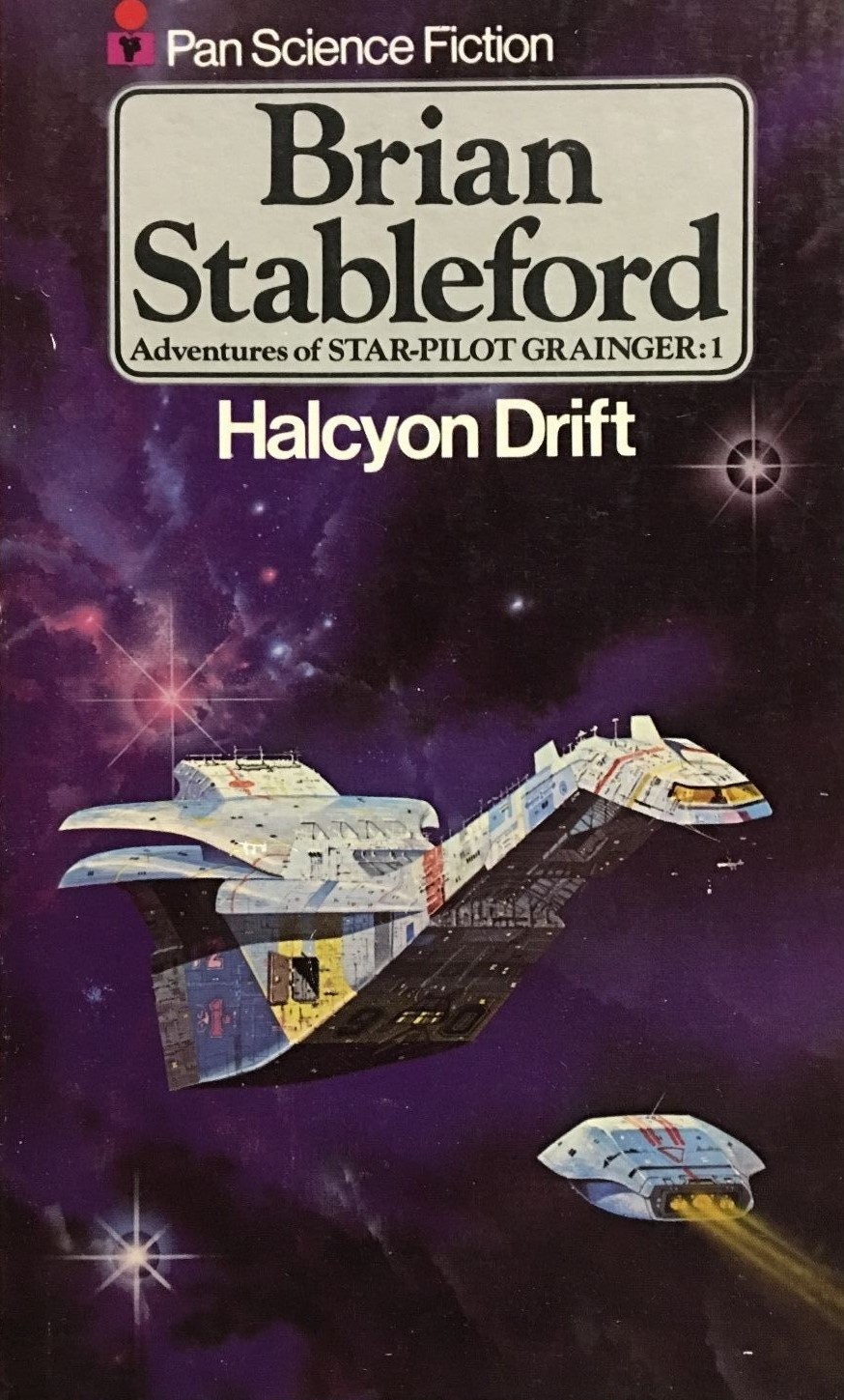
Book Review: The Halcyon Drift, Brian Stableford (1972)

(Angus McKie’s cover for the 1976 edition)

2.75/5 (Vaguely Average)

I have not had the best luck with Brian Stableford’s science fiction (albeit, I’m not sure I’ve read a single short story of his). Jesse over at Speculiction… swears (and I believe him!) that Stableford is occasionally capable of intelligent and sustained SF — consult his wonderful review of Man in a Cage (1975). Jesse barely dignifies The Halcyon Drift (1972) with a review. I’m in the same boat (or spaceship?). It took weeks of staring at my battered copy in a pile of other superior “to review” novels to convince myself to put finger to keyboard. How does one approach a bare by the numbers outline of a space opera?

By starting with the plot?

The Prologue forms the most evocative and moody Continue reading →

Short Story Review: Marcel Schwob’s “The Death of Odjigh” (1892)

(John Yang’s cover for the 2017 edition)

4.25/5 (Very Good)

Marcel Schwob’s short stories (and invented biographies) inspired the likes of Jorge Luis Borges, Roberto Bolaño, and other proponents of “intertextual” and “encyclopedic” literature. Due to this intellectual genealogy which speaks to my very fiber, I purchased a copy of Wakefield Press’ gorgeous 2017 edition of The King in the Golden Mask (1892), which contains a kaleidoscope of fascinating fictions  filled with evocative imagery and metafictional delights. I eagerly await a new edition of Schwob’s pseudo-historical biographies Imaginary Lives Continue reading →

Book Review: The Two-Timers, Bob Shaw (1968)

(Diane and Leo Dillon’s cover for the 1968 1st edition)

2.75/5 (Vaguely Average)

Various Bob Shaw fans told me to read Nightwalk (1967) or find a copy of Other Days, Other Eyes (1972)—especially as I adored one of the short stories that appeared in the later fix-up novel —“Light of Other Days” (1966). Instead, I cast wary eyes toward my shelves and read The Two-Timers. I wish I read Nightwalk. I tried, I must confess, but wasn’t in the mood and then something about The Two-Timers’ Diane and Leo Dillon cover—the doubling visages, contorted, anguished, and angular—pulled me in. For the full glory of the image, I’ve included a his-res scan below.

The Plot

John Breton’s relationship with his wife, Kate, is Continue reading →

Updates: Kate Wilhelm (June 8, 1928-March 8, 2018)

(My Kate Wilhelm collection)

Today I learned on twitter that Kate Wilhelm passed away on March 8th. A sadness has descended far more than I thought it would for someone I’ve never met…. But the intimate activity of reading always casts an entrancing net of familiarity with the creation and creator. If she’s new to you, I recommend her most famous Hugo- and Nebula-winning fix-up novel Where Late the Sweet Birds Sang (1976)–I’ve linked ta review from my friend Admiral Ironbombs. I’d returned to the novel myself over the last week in audiobook form on my drive to work. It’s as powerful and unsettling as I remember it from my first read-through as a teen somewhere between 2006 and 2008.

As frequent readers of my site might know, she is one of my favorite authors—especially in short story (novella) form–her short story collection The Downstairs Room and Other Speculative Fiction (1968) is required SF reading. My favorite short fiction includes the Nebula-nominated “Baby, You Were Great!” (1967) and the Nebula-Award winning “The Planners” (1968). They are entrancing, Continue reading →

Adventures in Science Fiction Cover Art: The Recumbent Figures and Constructing Cities of Alberto Cavallari

(Alberto Cavallari’s cover for 1972 edition (Galassia 178) of the anthology The Dark of the Soul (1970), ed. Don Ward)

As my 60s/70s Italian SF art explorations continue on both my site (here and here) and on twitter (@SFRuminations), I’ve come to the conclusion that Italy’s SF easily ranks among the most appealing (at least to me) graphic explorations of the dynamic genre. For most fans of SF art, one name will immediately spring to mind (in part because he created a few covers for American editions)—the masterful Karel Thole. However, I am increasingly impressed by less known Italian artists brought in for shorter periods of time by the Italian press Galassia. This post will focus on one of those figures—Alberto Continue reading →