Adventures in Science Fiction Cover Art: Future Archaeology and Mysterious Artifacts (Alien + Human)

SPCSCNCFCC1953

(Hannes Bok’s cover for the  Space Science Fiction [UK], Volume 1 No. 4 (1953), ed. unlisted)

A spaceship arrives on Mars…  After a cursory initial exploration, the human astronauts conclude that the planet has always been barren and uninhabited.  But in some chasm or scattered in desolate plain, a column is found, and rows of mysterious buildings, and a pulsating crystal…  An abandoned outpost of an alien society?  Or, Earth’s mysterious forebearers…  Summaries such as this one proliferate the dusty SF paperbacks on back shelves of used book stores and the closets of SF fans — the variations are countless.

Queue my cover art theme: The future discovery of mysterious ruins/artifacts Continue reading →

Updates: My 7 Favorite Metafictional Science Fiction Novels

Here are my seven favorite metafictional science fiction novels. By metafiction I’m referring to devices such as breaking the fourth wall (characters addressing the audience), the author addressing the reader, a story about a writer writing a story, a story containing another work of fiction within it, a work where the narrator reveals himself or herself as the author of the story, narrative footnotes, etc….

I’d love to hear your favorites (they don’t have to be novels)!

Obviously, these types of experimental works only appeal to some readers (especially fans of the sci-fi New Wave movement of the late 60s and early 70s) but I personally love seeing experimentation in an often — dare I say — stylistically stale genre.  Often, the metafictional aspects do not prevent authors from deploying traditional narratives.

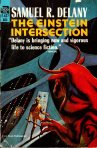
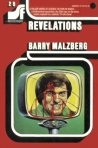
 71nOA-QfpuL NSTNINT1967 RVLTNSXKSK1977

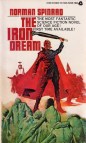
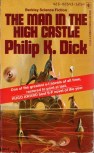
 THIRNDRM1972 MNINTHCST1974

My top seven (and an honorable mention):

1. Beyond Apollo, Brian N. Malzberg (1972) (REVIEW) — what you read is most likely the novel written by the main character. However, he’s most likely insane so attempting to get AT the true nature of his voyage to Venus is purposefully layered… Complicating the matter is how unreliable of a narrator he is and the fact that he’s tells many versions of the same story. Malzberg pokes fun at pulp science fiction throughout — which he clearly enjoyed as a child.

2. Stand on Zanzibar, John Brunner (1968) — the metafictional aspects are rather hidden in this New Wave masterpiece (my single favorite sci-fi novel).  Brunner’s vast (in scope and depth) mosaic of invented book fragments, advertising jingles, and narrative portions are interspersed with news articles taken from his own day — including the school shooting at the University of Texas in 1966.  Of course, as readers we’re geared to imagining that everything Continue reading →

Book Review: The Ice Schooner, Michael Moorcock (1969)

IMPULSENOV1966

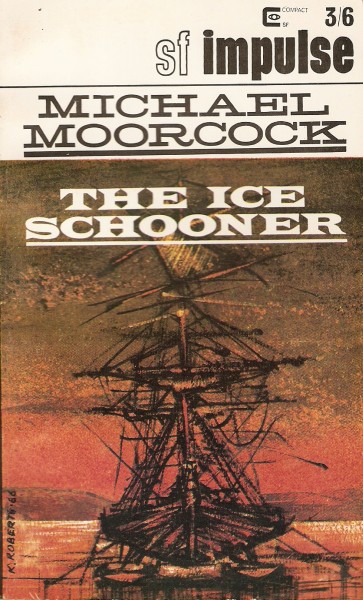
(Keith Robert’s cover for the 1966 edition)

3.25/5 (Average)

The Ice Schooner (1969) is the second of Michael Moorcock’s novels I’ve read — the first was the equally unremarkable adventure The Warlord of the Air (1971).  The Ice Schooner, an homage to seafaring  works of Joseph Conrad, functions as a standalone novel without the trappings of Moorcock’s multi-verse mythology.  Despite the lack of explicit connection between this novel’s hero and the “eternal champion” character archetype that features in so many of his works, one could argue that Konrad Arflane displays many of the same Continue reading →

Adventures in Science Fiction Cover Art: The Composite Cover (illustrating a multiplicity of scenes, stories, thematic elements) Part II

THTHRSDFTM1975

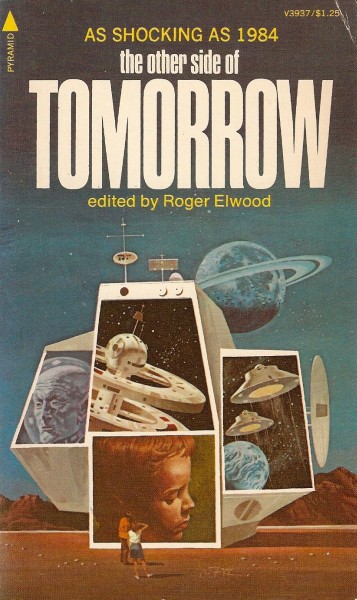
(Vincent di Fate’s cover for the 1975 edition of The Other Side of Tomorrow (1973), ed. Roger Elwood)

My second composite cover post — here’s a link to Part I if you missed it.  I’ve included a few covers by Vincent di Fate who has always been one of my favorite illustrators of the 1970s.  His cover for The Other Side of Tomorrow (1973) is top-notch.  A conglomerations of screens are placed on a barren stylized landscape where two figures gaze intently at them.  Each screen shows a different scene, a space station, spaceships, a boy’s contemplative face, an old man — and, a ringed planet looms in the background.  Whether or not the screens illustrate individual stories in the collection is unclear — regardless, the composite nature of the illustration is  Continue reading →

Adventures in Science Fiction Cover Art: The Composite Cover (illustrating a multiplicity of scenes, stories, thematic elements)

Screen shot 2013-01-27 at 5.27.06 PM

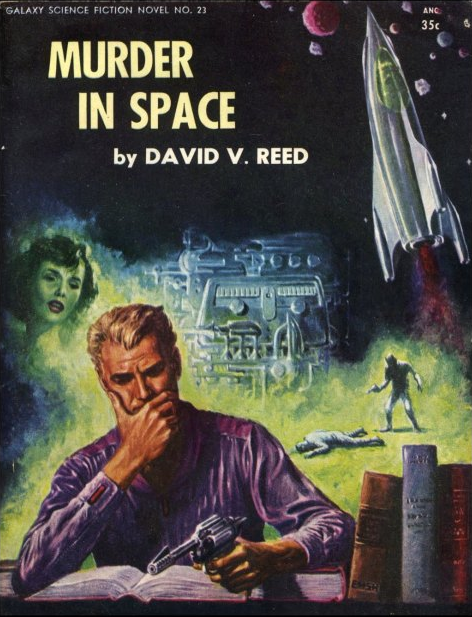
(Ed Emshwiller’s cover for the 1954 edition of Murder in Space (1944), David V. Reed)

Ed Emshwiller’s cover for the 1954 edition of Murder in Space (1944) perfectly embodies the composite cover comprised of sequences from the narrative.  Our hero (or villain) plots the murder in the foreground (guns, books, furrowed brow), commits the murder in the background, his love interest looks over his left shoulder (she’s constantly on his mind), and some random astroids/planets (let’s call them space rocks), a spaceship, and a strange piece of technology alert us to the science fiction aspect of the narrative…  The uncredited cover for the 1955 edition of The Altered Continue reading →

Updates: Recent Science Fiction Acquisitions, Magazine Edition No. I (Galaxy 2x, Worlds of If 3x, The Magazine of Fantasy and Science Fiction 1x)

My first science fiction magazines!

Although I’m not sure that I want to collect the entire catalogues of either Worlds of If or The Magazine of Fantasy and Science Fiction, I wouldn’t mind starting a collection of Galaxy (one of the more famous magazines).  I’ve been tentative in the past about purchasing magazines for one simple reason: a large percentage of their contents, especially if by well-known authors, are rewritten/expanded/re-conceptualized for later short story collections or novel publication form.  Thus, what version you read in the magazine is rarely the more polished version found in later editions.  For example, in the August 1965 issue of Galaxy Frank Herbert’s Do I Wake or Dream? was expanded for the 1966 novel publication under the title Destination: Void (which was revised again for the much later 1978 edition).  Novels like Dune (1965) are themselves fix-up novels from shorter novels previously serialized in magazines — Dune World (1963) and The Prophet of Dune (1965).  However, six magazines for one dollar each was too good of a deal to pass up….

The only magazine I desperately want to collect is New Worlds due to the quantity of experimental New Wave material which was published during Moorcock’s editorship.

(Gray Morrow’s cover for the August 1965 issue) Continue reading →

Book Review: Lords of the Starship, Mark S. Geston (1967)

(John Shoenherr’s cover for the 1967 edition)

3.75/5 (Good)

Mark S. Geston’s first novel Lords of the Starship (1967), written at the age of 21 while he was an undergraduate history student, revolves around a fascinating premise: The construction of a massive (fake) spaceship intended to lift a society out of a crippling malaise.  The narrative covers hundreds of years and seemingly innumerable characters.  The lack of distinct characters is the most frustrating aspect of the work.  However, the extremely dark tone and satirical underpinnings lift the novel above the endless morass of earlier pulp sci-fi.

For fans of 50s/60s space opera and more traditionalist 60s Continue reading →

Book Review: What Entropy Means to Me, George Alec Effinger (1972)

(Stanislaw Hernandez’s cover for the 1973 edition)

5/5 (Masterpiece) (*caveats below*)

Nominated for the 1973 Nebula Award (lost to Asimov’s disappointing The Gods Themselves)

“She was Our Mother, so she cried.  She used to sit out there, under that micha tree, all day as we worked cursing in her fields.  She sat there during the freezing nights, and we pretended that we could see her through the windows in the house, by the light of the moons and the hard, fast stars.  She sat there before most of us were born; she sat there until she died.  And all the time she shed her tears.  She was Our Mother, so she cried” (11)

What Entropy Means to Me (1972) is one of the more satisfying products of the New Wave science fiction movement of the 60s and 70s that I’ve read.  I place it in the pantheon of Malzberg’s Revelations (1972), Samuel Delany’s Nova (1968), and Brunner’s Stand on Zanzibar (1968).  Effinger revels, and I mean gloriously revels, in metafictional Continue reading →

Updates: Recent Science Fiction Acquisitions N. XLV (Heinlein + Farmer + Shaw + Lanier)

My San Antonio, TX haul….

I’ve read multiple of Shaw’s books in the past — they are often intriguing on the conceptual level but fall apart during delivery (Ground Zero Man, One Million Tomorrows)….  But, the back cover of Shadow of Heaven (1969) was intriguing enough to grab a copy.

The multiple Farmer novels I’ve read (most of the Riverworld series and Traitor to the Living) were trash.  But, I’m willing to give him another go — against my better judgement.

Heinlein is overrated but readable and Stephen Lanier’s Hiero’s Journey (1973) is supposed to be an intriguing post-apocalyptical tale….

1. Shadow of the Heaven, Bob Shaw (1969)

(George Underwood’s cover Continue reading →