Book Review: Under a Calculating Star, John Morressy (1975)

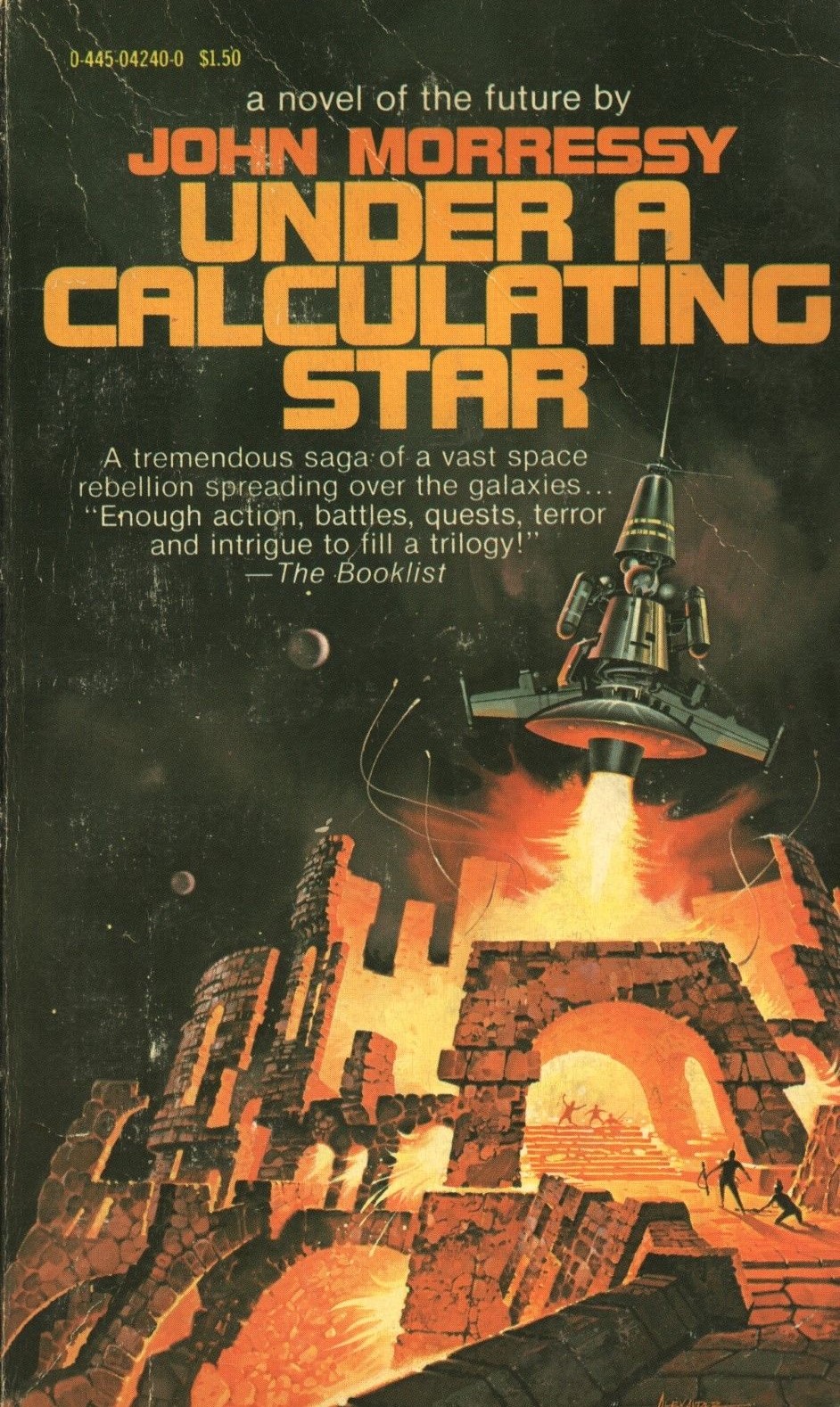
(Paul Alexander’s cover for the 1978 edition)

3/5 (Average)

After finishing John Morressy’s Frostworld and Dreamfire (1977), I tracked down another volume of his Del Whitby sequence. Although far from as engaging and emotionally affective as the former, Under a Calculating Star (1975) provides the historical background to the Morressy’s weirdly primitive far future world: the origins of the Sternverein (the dominant business polity), the explanation of why swords and knives are the weapons of choice while high-tech spaceships roam the interstellar expanses, and the role of Old Earth in the colonization of the far flung reaches. Historical content aside, Under a Calculating Star‘s plot and characters fail to engage and the worlds and societies are one-dimensional in comparison to Frostworld and Dreamfire‘s metamorphic Onhla and the planet Hraggellon, locked in its unusual orbit. Continue reading →
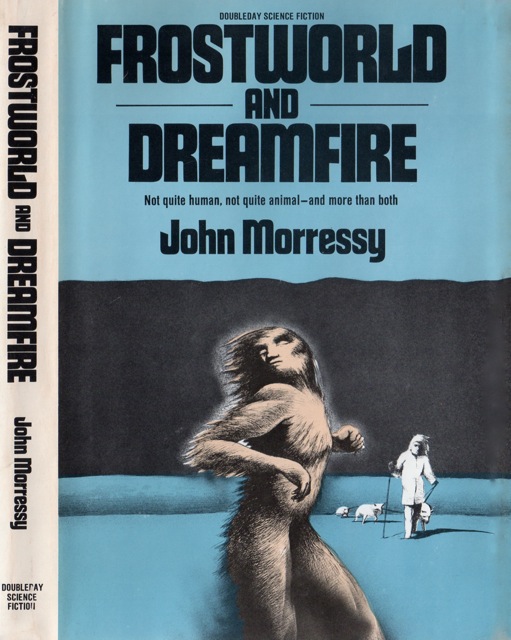
Book Review: Frostworld and Dreamfire, John Morressy (1977)

(David Wilhelmsen’s cover for the 1977 edition)

4.25/5 (Very Good)

John Morressy’s moving SF epic Frostworld and Dreamfire (1977) is set in the Del Whitby sequence (1972-1983) of novels which explore conflict and colonialism (humans and humanoid aliens) within the loose human Sternverein polity.  Conceptually the sequence, which does not have to be read in order, fascinates: the first three novels–Starbrat (1972), Nail Down the Stars (1973), and Under a Calculating Star (1975)–analyze the same conflict from three different perspectives (SF Encyclopedia entry). Continue reading →

Updates: Vonda N. McIntyre (August 28, 1948 – April 1, 2019)

Vonda N. McIntyre (August 28, 1948 – April 1, 2019) passed away yesterday from pancreatic cancer. McIntyre, best known for her Hugo and Nebula-winning SF novel Dreamsnake (1978) and her Star Trek Novels and film adaptations (1981-2004) (bibliography), published her first SF story “Breaking Point” in in the February 1970 issue of Venture Science Fiction Magazine. John Clute in SF Encyclopedia describes her two best-known SF novels: Continue reading →

Book Review: The Road to Corlay, Richard Cowper (1978)

(Gary Viskupic’s cover for the 1979 edition)

3.75/5 (Good)

Nominated for the 1980 Nebula Award for Best Novel

Richard Cowper’s The Road to Corlay (1978) charts the ethereal pastoral wanderings and religious musings of the followers of The White Bird of Kinship, an anti-institutional pseudo-Christian religion at odds with the oppressive Church Militant that holds sway over what remains of Europe. Continue reading →

Adventures in Science Fiction Cover Art: Crashed Spaceships, Part III

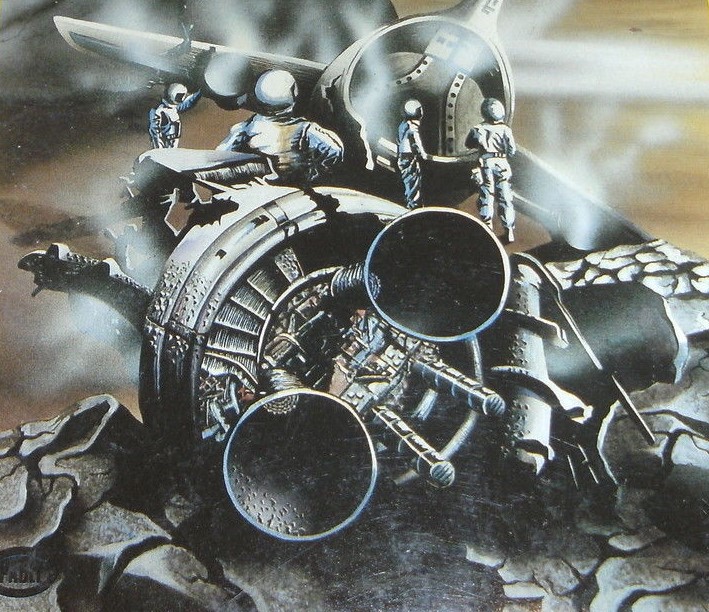
(Detail from Alan Daniels’ cover for the 1980 German edition of Open Prison (1964), James White)

The crashed spaceship — a wrecked hulk spinning in the emptiness of space, shattered metal struts strewn across an alien landscape…. I find few SF scenarios more nostalgic than this one as a younger me was obsessed with books about the societies formed from the survivors of such cataclysms (Anne McCaffrey’s Acorna Universe sequence, of dubious quality now, was a cornerstone of my youth).

I have selected a range of fascinating covers which add to a series I made in 2012 (Part I) and 2013 (Part II). My favorite of the bunch is Tibor Csernus’ cover for the 1973 French edition of Clifford D. Simak’s Time and Again (1951) due to the verdant and wet landscape the spaceship finds itself in. My second favorite is Dean Ellis’ “descriptive” cover for the 1974 edition of Alan Dean Foster Icerigger (1974). It doesn’t try to be surreal but rather depicts a scene straight from novel. I usually prefer when the artist takes a more unusual approach but in this case Ellis narrows in on the wonder of the premise. Continue reading →

Short Story Reviews: Four Stories from New Worlds Science Fiction (April 1964), ed. John Carnell

To mix things up a bit I decided to review four stories in John Carnell’s last issue of New Worlds Science Fiction (April 1964) before he handed over the reins of the dying publication to Michael Moorcock, who would elevate it to New Wave greatness. Other than the James White serial Open Prison, which I plan on reading in book form when I procure a copy, three of the four authors reviewed below owed much of their careers to John Carnell, and would see few stories in print after his departure (see the individual story reviews for details). Only Barrington J. Bayley, writing as P. F. Woods, would see continued publication (and growing popularity) in New Worlds under Moorcock.

Of the stories I recommend reading William Spencer’s rumination on overpopulation and urban life,  “Megapolitan Underground.” The others are worthwhile only for die-hard fans of Carnell’s New Worlds and other editorial projects. Continue reading →

Updates: Recent Science Fiction Acquisitions No. CCV (Farmer + Simak + Effinger + New Dimensions Anthology)

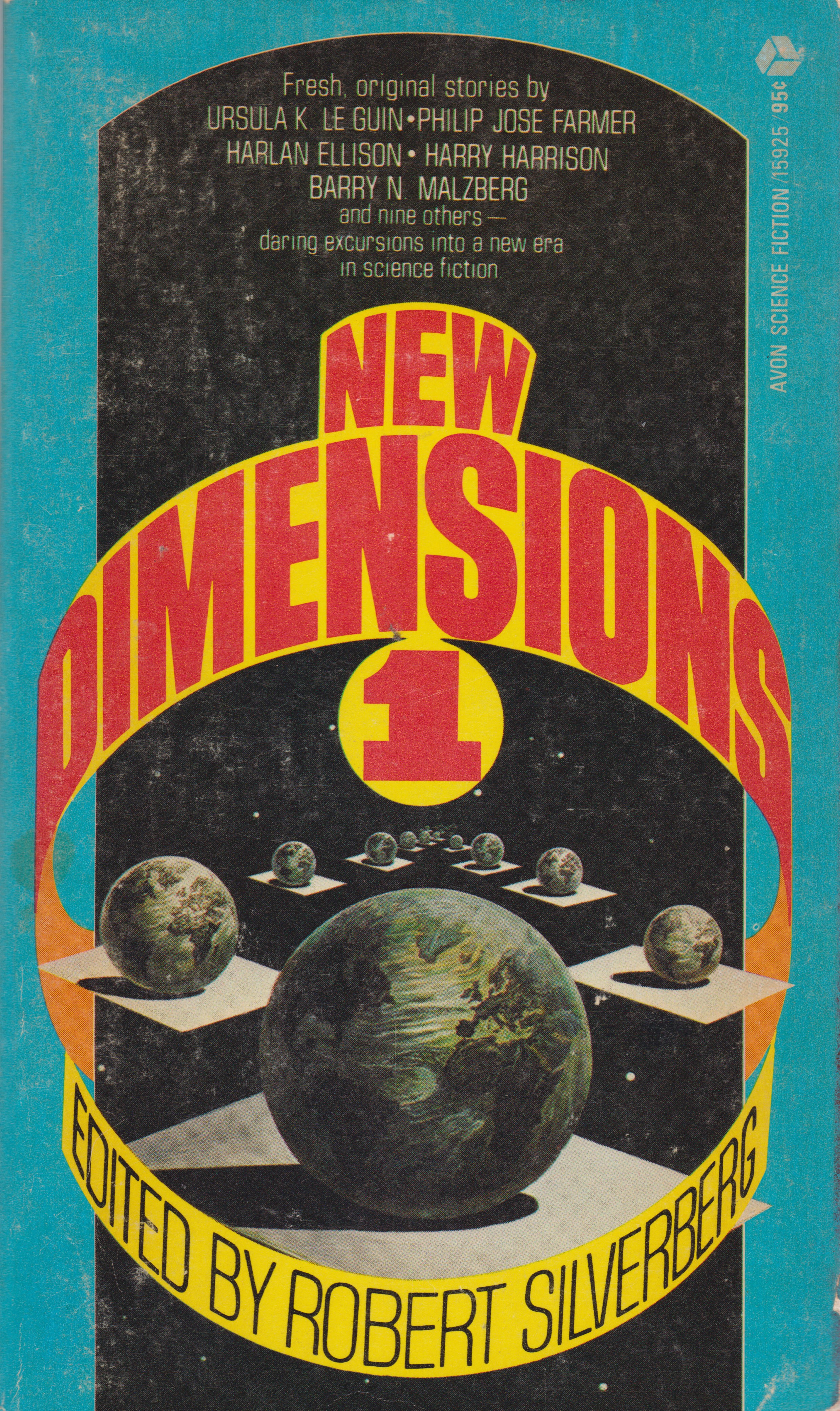
1. I recently read and reviewed enthusiastically New Dimensions 3, ed. Robert Silverberg (1973). Inspired, I procured quite a few more in the series… Here is number 1. Looks like an absolutely spectacular lineup — Le Guin, Ellison, Malzberg, Lafferty, etc.

2. One always needs more Clifford D. Simak, right?

3. Huge fan of George Alec Effinger’s novels and short stories. Here’s what I’ve reviewed so far…. Heroics (1979), Irrational Numbers (1976), and What Entropy Means to Me (1972).

4.  Philip José Farmer, despite multiple masterpieces, churned out a lot of crud… I expect this will fall in that category.

Note: The hi-res scans are of my personal copies — click to enlarge.

Let me know what you think in the comments!

Enjoy!

~

1. New Dimensions 1, ed. Robert Silverberg (1971)

(Uncredited cover for the 1973 edition) Continue reading →

Adventures in Science Fiction Interior Art: Monday Maps and Diagrams (Science Fiction) 2/18/19 — David Brin’s Sundiver (1980)

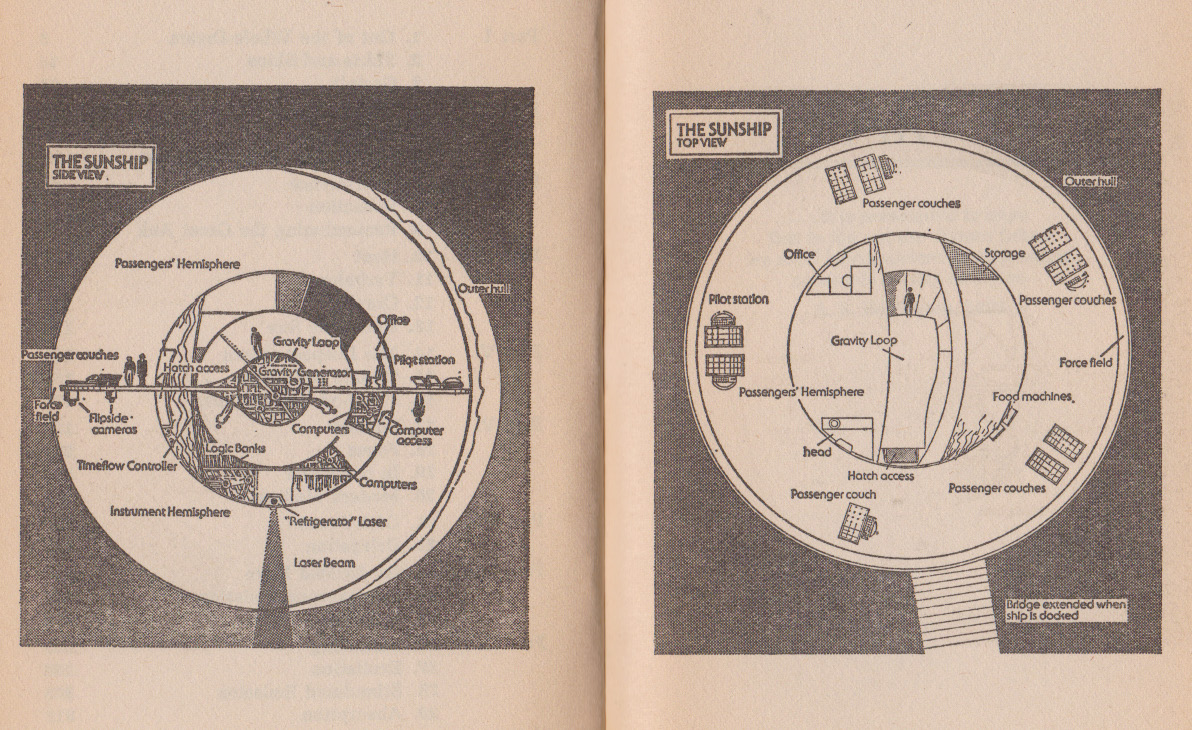
Today’s diagram comes from David Brin’s first novel in the Uplift sequence, Sundiver (1980). I remember virtually nothing from the novel (I must have been 15 when I read it), although, I was intrigued enough to read ALL the sequels. The years have sequestered them to the “I enjoyed them as a kid but probably wouldn’t enjoy them now” category. This series on maps and diagrams was a nostalgic journey…. leafing through the pages of tomes I had long forgotten.

The diagram in Sundiver is a vehicle to descend below the surface of the sun. As with so many diagrams and maps, I’m unsure if it is needed or adds to the reading experience. But like a gorgeous cover, the image draws you in…. and suggests grand adventures and fascinating worlds.

The artist is David Perry.

The Diagram (click to enlarge)

Citation: Hi-res scan of my personal copy of the diagram from the 1983 Bantam edition of David Brin’s Sundiver (1980) [click for larger image]. Continue reading →

Book Review: The Word for World is Forest, Ursula K. Le Guin (1972)

(Richard Powers’ cover for the 1976 edition)

4.5/5 (Very Good)

Won the 1973 Hugo for Best Novella. Nominated for the 1973 Nebula for Best Novella.

In November 1969, word of the My Lai Massacre (March 16, 1968), where American soldiers killed (and raped and mutilated) between 347-504 unarmed South Vietnamese civilians, reached American newspapers. Ronald L. Haeberle’s iconic (and horrifying) photograph of massacred children and adults–superimposed with, “Q. And babies? A. and babies,” the chilling lines from NBC’s interview with massacre participant Paul Meadlo–was transformed into the “most successful poster” opposing the Vietnam War by the Art Workers Coalition. While written (most likely) before news of the massacre appeared in the press, Ursula K.  Le Guin brilliantly channels this general anti-war anger, transposed to an alien local with colonizing humans as villains, in The Word for World is Forest (1972). Note: Le Guin wrote her uncannily similar novel in 1968, before word of the massacre appeared in the news. Continue reading →