Updates: Recent Science Fiction Acquisitions No. CCXXXI (Sheri S. Tepper + Paul H. Cook + Robert Merle + Anthology)

1. I bought this themeless hodgepodge anthology for two reasons–the UK 1980 edition has a cool spaceship! And second, it contains Chad Oliver’s generation ship short story “The Wind Blows Free” (1957). MPorcius calls it one of Oliver’s best. As I’ve not been enamored with his brand of SF, I’m eager to try a short story on a favorite theme far outside of his normal anthropological-focused oeuvre.

I’ve previously reviewed Oliver’s The Shores of Another Sea (1971).

2. Sheri S. Tepper is a glaring hole in my SF knowledge. I often explore the back catalog before plunging into the best known novels of an author—The Revenants, her first published novel, is “a long, complex work of SF” according to SF Encyclopedia. I wish it would be a tad more descriptive…. the novel has a fun map which I’ll feature in a Monday Maps and Diagrams post.

3. French post-apocalyptic SF in translation! With an awful cover…

4. Paul Cook is another unknown author to me. His first novel, Tintangel (1981) has a bizarre premise (see blurb below). This might be my next SF read.

Let me know what books/covers intrigue you. Which have you read? Disliked? Enjoyed?

~

1. A Sea of Space, ed. William F. Nolan (1970)

(Bob Layzell’s cover for the 1980 edition) Continue reading

[Short] Book Reviews: Rogue Moon, Algis Budrys (1960) and Syzygy, Michael G. Coney (1973)

Note: My “to review” pile is growing. Short reviews are a way to get through the stack. Stay tuned for more detailed and analytical reviews.

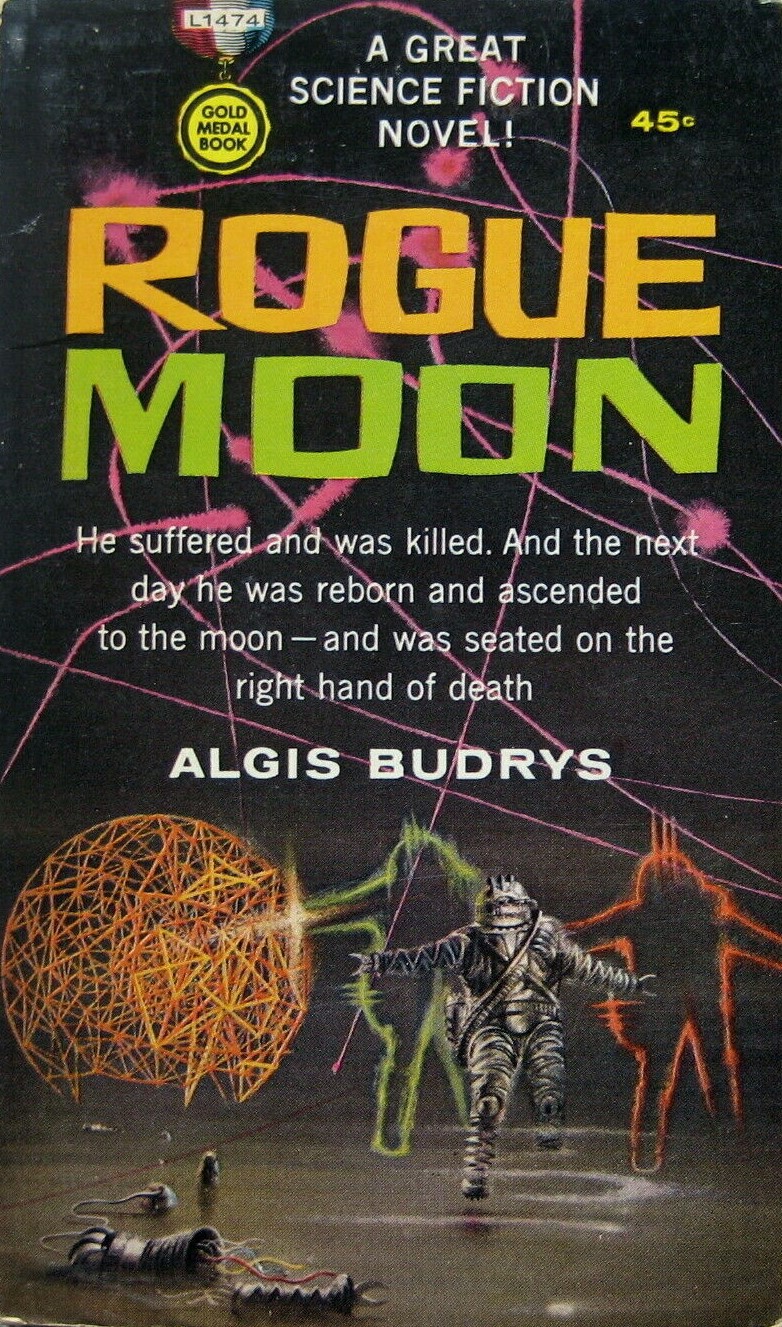
1. Rogue Moon, Algis Budrys (1960)

(Richard Powers’ cover for the 1960 edition)

4/5 (Good)

Over the almost decade of reading for my site, I’ve enjoyed Algis Budrys’ short stories and disliked his novels. After the moody and noir(ish) Rogue Moon (1960), I’ll continue exploring his oeuvre.

Rogue Moon, one of his best-known works, is an odd and oblique read. And odd in that reviewers seem to expect the science fiction al core should be given greater weight than the melodrama… Unlike the melodrama in Michael G. Coney’s Syzygy reviewed below, Budrys’ brand engages as each of his Continue reading

Updates: Recent Science Fiction Acquisitions No. CCXXX (Ben Bova, Suzette Haden Elgin, Louis Trimble, Josephine Saxton, Orbit Anthology)

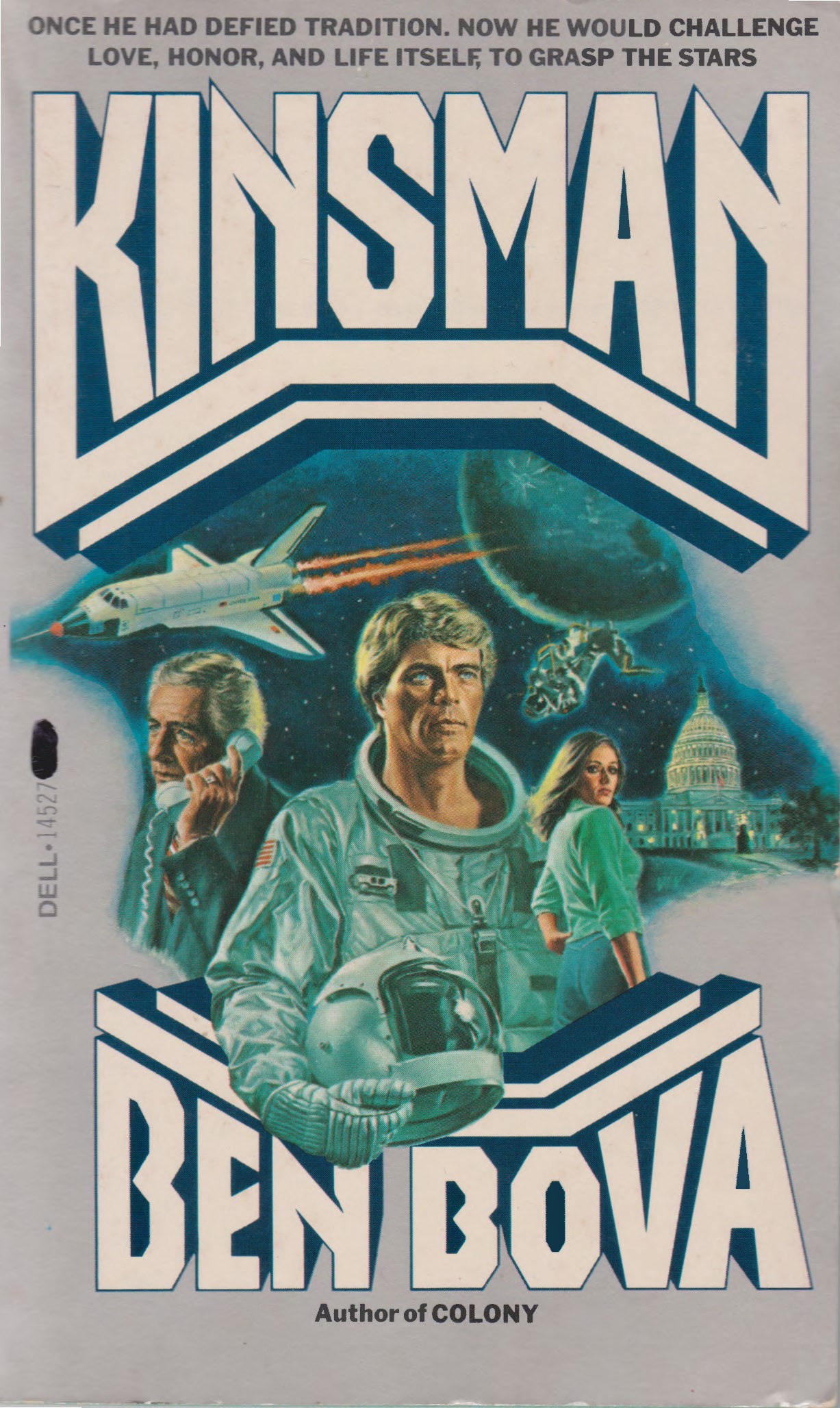
1. Ben Bova is not a site favorite…. But I’m willing to give a handful of his better known novels a shot. Here is the first (in the internal chronology) of the Kinsman sequence. Low hopes.

If you want to know why I have low hopes check out these three reviews:

2. Side 1 of an Ace Double. Suzette Haden Elgin’s The Communipaths is the first in her Coyote Jones sequence. I had mixed views on the third volume: At the Seventh Level (1972).

3. Side 2 of an Ace Double. Back in 2012 I reviewed Louis Trimble’s intriguing SF allegorical city tale The City Machine (1972). It was a competent work that, in the hands of a more polished writer, could have been so much more. Not sure what to expect from this one…. the zany nature of the blurb is off-putting.

4. Josephine Saxton’s The Hieros Gamos of Sam and An Smith (1969) still haunts me. I need to read more of her short fiction.

5. And finally, my Orbit anthology series collection grows!

Previous reviews:

Let me know what books/covers intrigue you. Which have you read? Disliked? Enjoyed?

~

1. Kinsman, Ben Bova (1979)

(Uncredited cover for the 1981 edition) Continue reading

Updates: Recent Science Fiction Acquisitions No. CCXXVIII (Julian May, C. H. Cherryh, Neal Barrett Jr., and William Greenleaf)

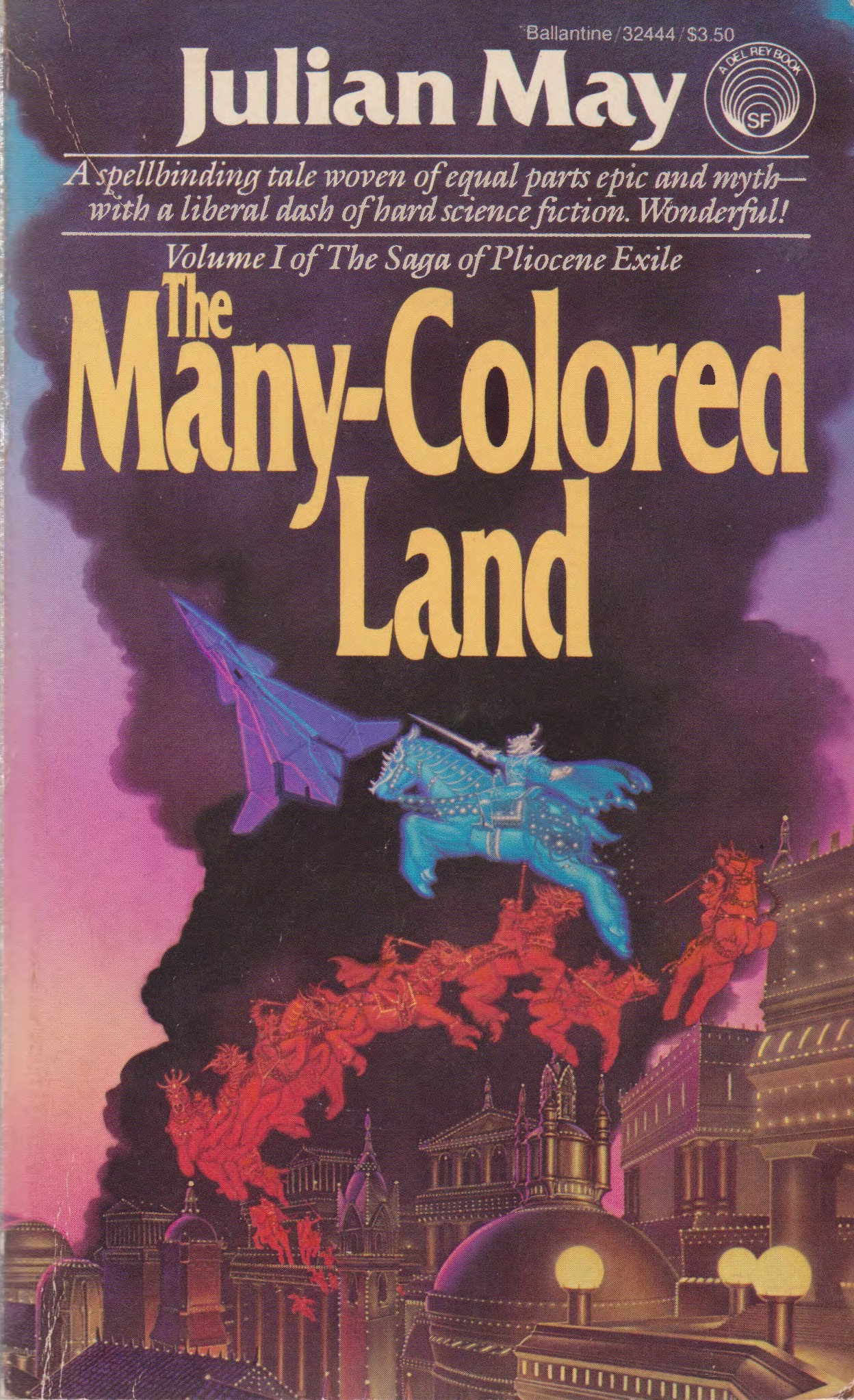
1. Julian May’s The Many-Colored Land (1981), winner of the 1982 Locus Award for Best SF novel (Nebula-nominee and third in Hugo voting), does not have a premise that grabs me (time-travel to the Pliocene Era of Earth). But count me intrigued! And her novel is graced with a fun map that I’ll post in a future Monday Maps and Diagrams post.

2. Kirby’s cover has serious problems… check it out. It’s an alien worm? Neal Barrett Jr.’s Stress Pattern (1974) seems to blend Dune with a more anthropological mystery take on SF à la Lloyd Biggle, Jr.’s The World Menders (1971)?

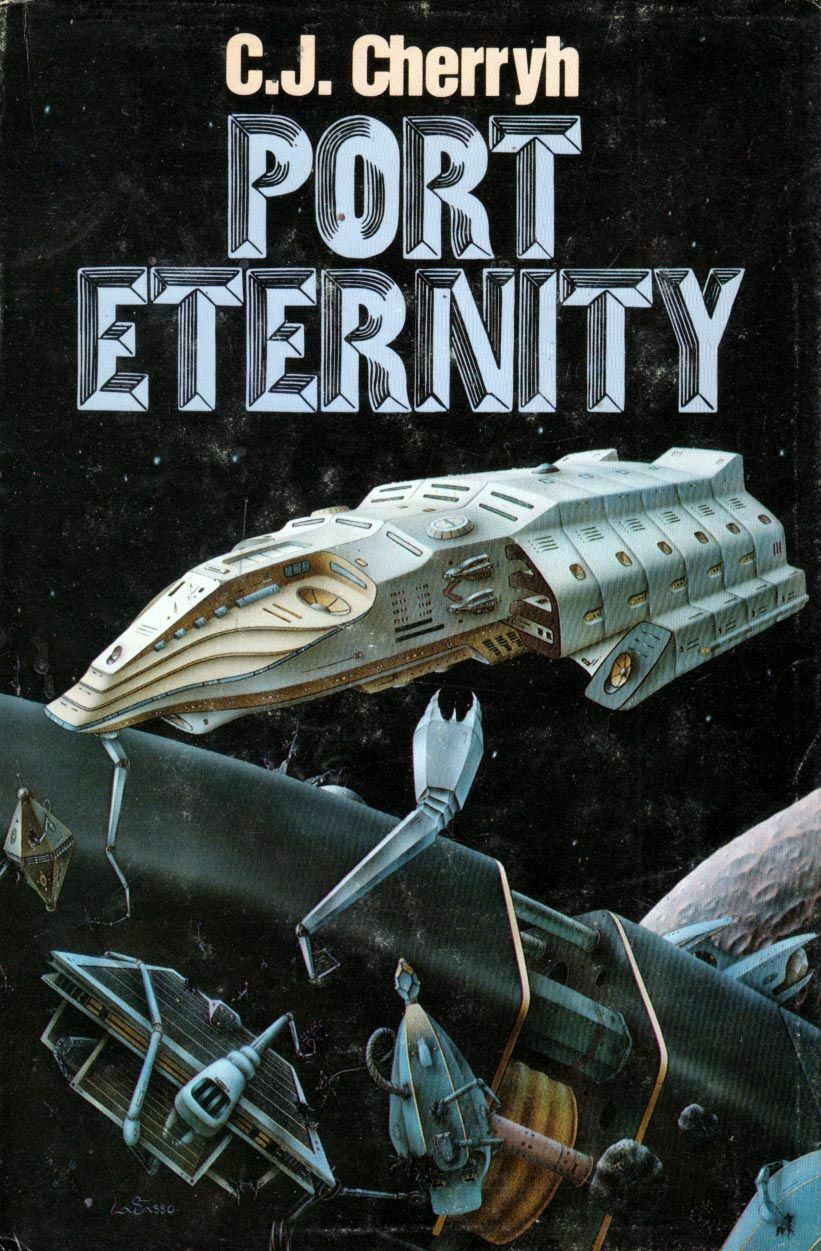
3. More early C. J. Cherryh! My recent review of Port Eternity (1982).

4. I’ll confess, I’m a fan of stranded on alien planet survival tales… don’t have high hopes for this one but I adore the James Gurney (of Dinotopia fame) cover.

Let me know what books/covers intrigue you. Which have you read? Disliked? Enjoyed?

~

1. The Many-Colored Land, Julian May (1981)

(Michael Whelan’s cover for the 1983 edition) Continue reading

Book Review: Port Eternity, C. J. Cherryh (1982)

(Gary LaSasso’s cover for the 1983 edition)

4/5 (Good)

In my late teens I encountered the space opera of C. J. Cherryh  through the Hugo and Nebula Award-winning Downbelow Station (1981).* I was hooked. Her paranoia-drenched spacescapes, interstellar freighters, the awe-inspiring cumulative world-building effect of innumerable novel sequences from distinct perspectives, and narration that dwells on psychological impact of events were my bread and butter. See below for the list of the ten (I think?) novels I’ve previously read (although many details blend together). For whatever reason I hadn’t returned to her SF in more than a decade. I am glad I did!

C. J. Cherryh’s Port Eternity (1982), part of the Age of Exploration sequence within the larger Alliance-Union world, can be read alone.  It is a claustrophobic rumination on identity Continue reading

Updates: Recent Science Fiction Acquisitions No. CCXXVI (Philip K. Dick, Tanith Lee, Paul Park, Gordon Eklund, and Poul Anderson)

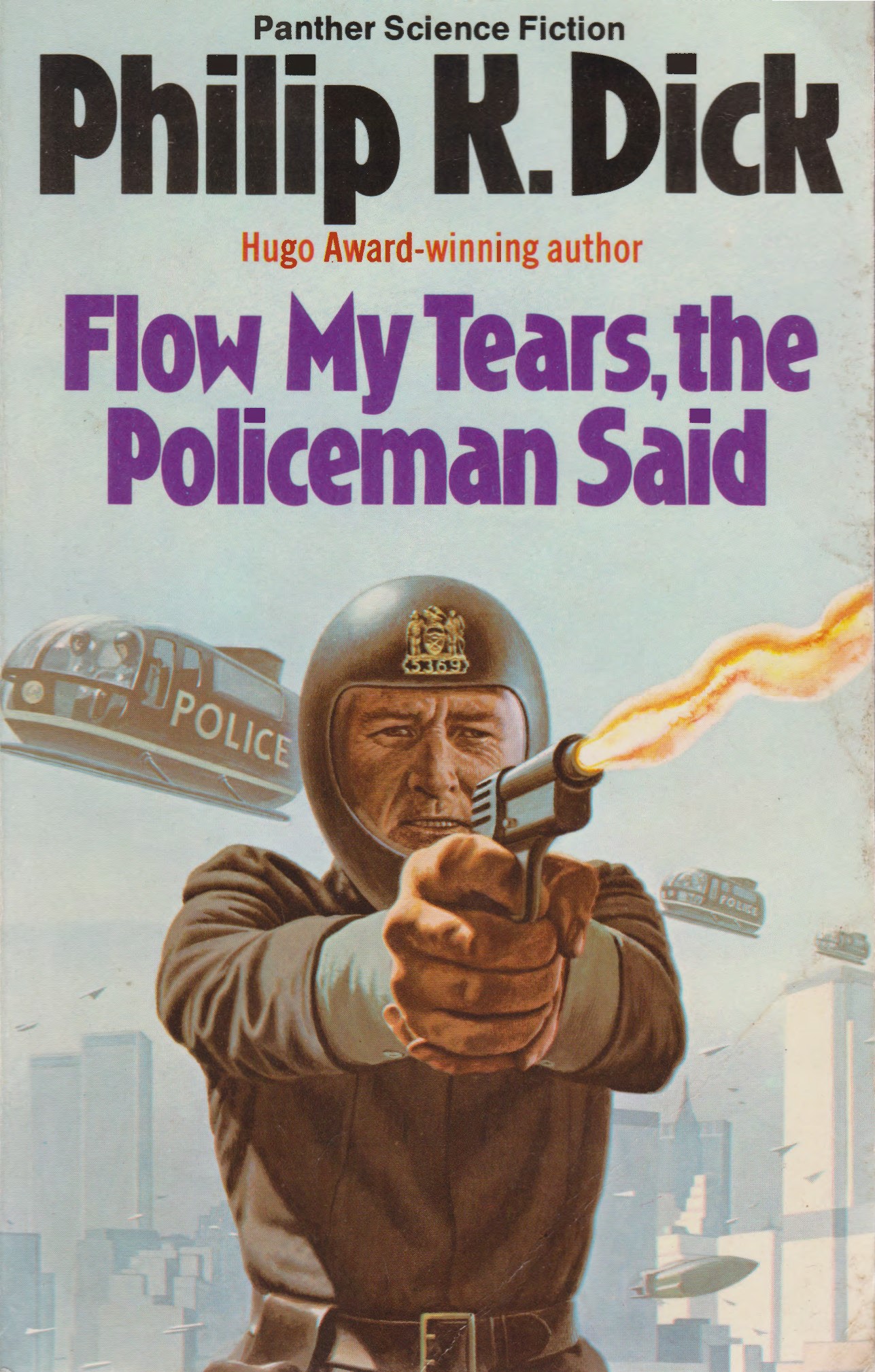
1. As I read the vast majority of Philip K. Dick’s novels pre-blog (i.e. pre-2010), many of the details have faded into a general morass of surreal fragments and paranoiac dreams. I know for certain Flow My Tears, the Policeman Said (1974) remains one of only a handful of unread works in his vast oeuvre.

This UK edition has a bizarre cover….

2. I thoroughly enjoyed Tanith Lee’s Don’t Bite the Sun (1976) and snatched another one of her early SF works—Day by Night (1980)…. the premise intrigues! A storyteller spins tales on a popular TV network that might not be stories at all…. but true accounts of the denizens from the other side of the planet.

3. A candidate for the worst cover of all time? The book by Gordon Eklund and Poul Anderson might not be much better. Certainly the risk purchase of the batch!

4. And finally, a riff on Brian Aldiss’ Helliconia formula? I can’t wait to read this one.

Let me know what books/covers intrigue you. Which have you read? Disliked? Enjoyed?

~

1. Flow My Tears, the Policeman Said, Philip K. Dick (1974)

(Richard Clifton-Dey’s cover for the 1976 edition) Continue reading

Book Review: Frontera, Lewis Shiner (1984)

(Vincent Di Fate’s cover for the 1st edition)

3.75/5 (Good)

Lewis Shiner’s Frontera (1984), a paranoid romp across post-democratic landscapes (both Earth and Mars) of decay and corporate takeover, contains a hypnotic premise and a not entirely convincing plot. Be prepared for a maelstrom of ideas and images: Subliminal messages. An abandoned Martian colony. Implanted Biological RAM. A dangerous voyage to Mars in old NASA shuttles. Corporate mercenaries. Hyper-violence. Mutant children. Transcendent mathematics.

Recommended for fans of gritty Continue reading

Updates: Recent Science Fiction Acquisitions No. CCXXIII (Jack Vance, Alexei Panshin, Brian Aldiss, Frederick Turner)

On a recent trip to Chicago I spent far too much on vintage SF at Bucket O’ Blood Books and Records (twitter).If you’re in the city and love old SF paperbacks, stop by! I’ll certainly be back. Here are the first four books from that haul.

1. Jack Vance is an author I always tend to buy but never enjoy as much as I think I should–see my recent review of Emphyrio (1969). Thoughts on this one?

2. I have yet to read anything by Alexei Panshin—at least I now have a copy of his masterpiece, Rite of Passage (1968) (nominated for the 1969 Hugo + won that year’s Nebula).

3. A lesser-known 70s comedic novel from Brian W. Aldiss…

4. And finally, the one I’m most excited about. Evolved humans are thrust into conflict on a terraformed, but dying, Mars. With a fun Powers cover to boot! The rest of Frederick Turner’s SF output appears to be the epic poem variety according to SF Encyclopedia.

Let me know what books/covers intrigue you. Which have you read? Enjoyed?

1. The Anome, Jack Vance (magazine, 1971)

(Paul Lehr’s cover for the  1973 edition) Continue reading

Updates: Recent Science Fiction Acquisitions No. CCXXII (Vernor Vinge + Keith Roberts + Ted Mooney + Michael D. Weaver)

(Detail from Chris Foss’ cover for the 1977 edition of The Grain Kings (1976), Keith Roberts—full cover below)

1. Always thrilled to have a new Keith Roberts collection! And this one with one of the few Foss covers that appeals to me….

2. As a teen Vernor Vinge was a must read author. I devoured The Peace War (1984), Marooned in Realtime (1986), A Fire Upon the Deep (1992), and A Deepness in the Sky (1999). I haven’t returned to him since. I am curious about his earliest published novel—Grimm’s World (1969)—gorgeously decked out with a Paul Lehr masterpiece of a cover.

3. My knowledge of cyberpunk is mostly limited to the early works of Bruce Sterling and William Gibson. Here is a lesser known work that certainly wasn’t “talked about for years to come” (book jacket advertisement). Clones, sentient handheld computers, etc. Looks like a fun brew.

4. Another “let’s explore early cyberpunk” purchase—in this case a near future work about information overload (and dolphin + human sexual relationships) marketed as mainstream literature. SF Encyclopedia describes Ted Mooney’s Easy Travel to Other Planets  (1981) as follows: “Set on a Near-Future Earth against a backdrop of global information sickness, war in the Antarctic and a new emotion nobody has ever felt before, it tells a love story – with visionary ramifications – concerning a woman marine biologist and the dolphin on whom she conducts experiments in Linguistics. It has been seen as a proto-Cyberpunk work, but its cool, pellucid, dissecting style – perhaps influenced by J G Ballard – is far removed from the hectic insistence that has characterized much of that school” (full article on Mooney).

Let me know what books/covers intrigue you. Which have you read? Enjoyed? Continue reading