Exploration Log 16: Clifford D. Simak’s speech “The Face of Science Fiction” (1953)

Clifford D. Simak’s speech “The Face of Science Fiction” appeared in Minnesota Libraries, vol. XVII, no. 7. (September 1953). He originally gave it to the Minneapolis Branch Library staff. I have not found evidence that the speech appeared elsewhere or is anywhere online. I requested the article through the university library I’m affiliated with. I’ve included a transcription below. I hope with the easy access of important primary sources related to Simak’s fan activities and views on SF, we can see more scholarship on his fiction in the future vs. empty repetition of time-worn designators of his brand of SF.1 As with other posts on Simak’s interviews, speeches, and fan articles, I’ll provide a few words of summary first.
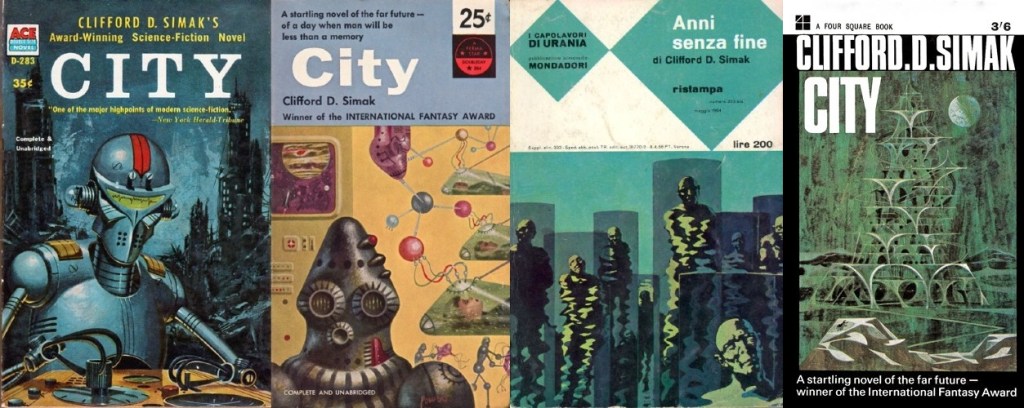
“The Face of Science Fiction” articulates the intersection of Simak’s own interest in the genre (and hope for its future), its larger history, with observations about the growing contemporary interest. He highlights the exploding popularity (and commercialism) the genre underwent in the 50s in the aftermath of WWII, for example the sheer quantity of magazines, toys, games, gadgets, and scientific gadgets designed with “science fiction motif” for teenagers. He charts his own exposure to the genre through authors like Jules Verne. 

And echoing later arguments by Darko Suvin, posits an incredible “long and honorable lineage” of the genre with works like the Greek Legend of Icarus, Plato’s Republic, Thomas Moore’s Utopia, and Jonathan Swift’s Gulliver’s Travels that detach its origins from the influence of Hugo Gernsback (he does not mention his name but does acknowledge the “first science fiction magazines” that appeared in 1926).2 Arguments like this one partially serve as a rhetorical flourish meant to legitimize the genre and to self-justify your own brand of writing. And like those classics of old, 50s SF seems to re-manifest some of that ancient maturity (“fewer and fewer of them think of it in terms of Buck Rogers and rocket guns”) with increasing quality of writing. While acknowledging the fix-up novels still hitting print culled from the old pulps, he hopes the “backlog of old stories” is coming to its end.3 He admits that modern science fiction is still a young genre with growing to do!
Continue reading

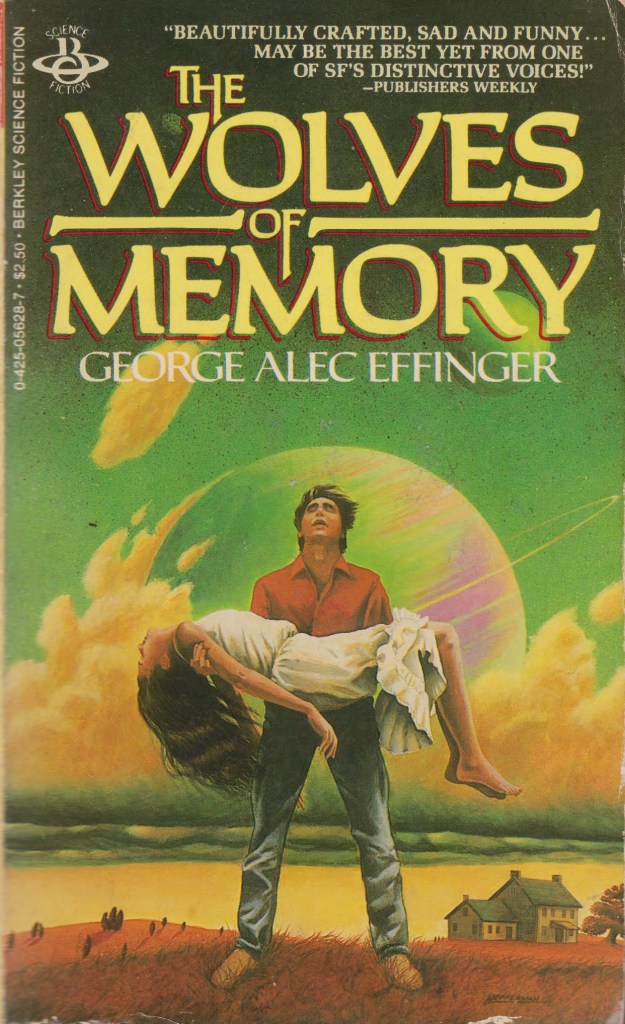
Short Book Reviews: George Alec Effinger’s The Wolves of Memory (1981) and J. J. Connington’s Nordenholt’s Million (1923)

Note: My read but “waiting to be reviewed pile” is growing. Short rumination/tangents/impressions are a way to get through the stack before my memory and will fades. My website partially serves as a record of what I have read and a memory palace for future projects. Stay tuned for more detailed and analytical reviews.

1. George Alec Effinger’s The Wolves of Memory (1981)

4.75/5 (Near Masterpiece)

I read almost 150 pages of George Alec Effinger’s masterful The Wolves of Memory (1981) before setting it down almost two years ago. As is often the case, I do not have a single reason why. It certainly had nothing to do with its quality. Perhaps Effinger’s uncanny evocation of dementia (through a SF lens) felt a bit too real. Perhaps his ability to render deeply affective interactions hurt in a way I rarely feel in science fiction. The volume sat on my desk waiting to be completed. I picked it up a few days days ago and finished in one sitting. I’m glad I did.

Continue reading

Updates: Podcast discussion of Philip K. Dick’s “Foster, You’re Dead” (1955)

I appeared on the podcast DickHeads (i.e. Philip K. Dick fans) to discuss one of his most underrated (in my opinion) short fictions: “Foster, You’re Dead” (1955). If you want to read the short story before you listen to the quite detailed discussion, it’s available online here. I’m a sucker for science fiction satires of 50s American defense policy, commercialism, and the idiocracy of fallout shelters. As I am allergic to listening to myself, I’ve not given it a re-listen! Hopefully it went as well as I thought it did at the time.

Also, here is my short review of the story–part of my larger review of the entire original anthology Star Science Fiction No. 3, ed. Frederik Pohl (1955)–from last year if you don’t have time to listen to the podcast at the moment.

Continue reading

Updates: Recent Science Fiction Purchases No. CCCLI (Arkady and Boris Strugatsky, Philip K. Dick, Howard L. Cory, Ward Moore and Avram Davidson, and Muriel Jaeger)

Which books/covers/authors intrigue you? Which have you read? Disliked? Enjoyed?

1. Arkady and Boris Strugatsky’s Roadside Picnic (1972, trans. Olena Bormashenko, 2012)

From the back cover: “Red Schuhart is a stalker, one of those misfits who are compelled, in spite of the extreme danger, to venture illegally into the Zone to collect the mysterious artefacts that the alien visitors left scattered around. His life is dominated by the place and the thriving black market in the the alien products. Even the nature of his mutant daughter has been determined by the Zone. And it is for her that he makes his last, tragic foray into the hazardous and hostile territory.”

Initial Thoughts: One of those obvious holes in my SF knowledge… I certainly have read about the writing pair but I’ve only read a story here and there–for example “Wanderers and Travellers” (1963, trans. 1966)–and one novel that I never managed to review. My father has been pushing me to read more of their work. And yes, Andrei Tarkovsky’s adaptation Stalker (1979) remains one of my favorite movies. I took a History of Russian Film class in college and wrote my term paper on Tarkovsky’s use of color.

Continue reading

Exploration Log 15: Clifford D. Simak’s fanzine article “The Future of Science Fiction” (1941)

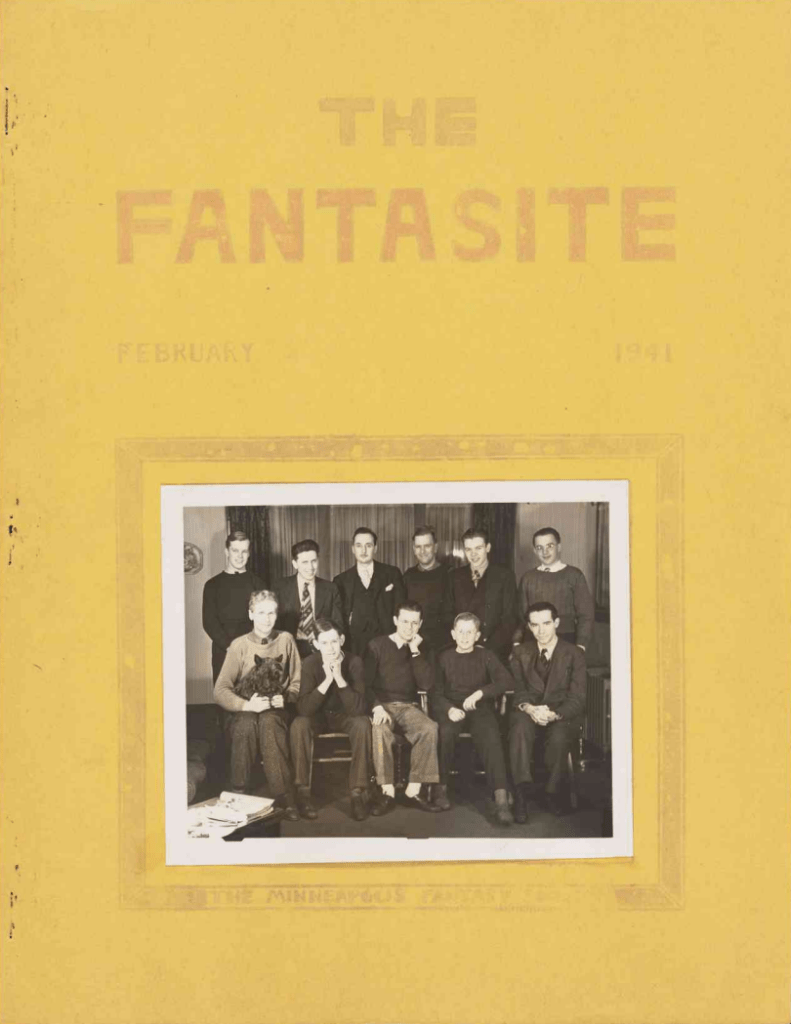
Clifford D. Simak’s “The Future of Science Fiction” appeared in the fanzine Fantasite, No. 2, ed. Phil Bronson (February 1941). You can read it online here. As the quality of the scan at the link is quite poor and close to unreadable in spots, I’ve transcribed the entire article below. In a few instances I have guessed based on vague letter shapes. If you spot an error, let me know!

The fanzine Fantasite, comprised of twelve issues between 1940 and 1944, was the official organ of the Minneapolis Fantasy Society. For more on the fanzine and its creator, consult the Fancyclopedia entries. The MFS was formed when when Simak arrived in Minneapolis and joined with the old Minneapolis Science Fiction League (Hugo Gernsback’s SF clubs). The second meeting happened at Simak’s house. As members went off to WWII, the group became less formal and eventually dissipated. Simak helped briefly resurrect the club after WWII, joined by Poul Anderson and others. Other SF authors who were members included Theodore R. Cogswell, Noel Loomis, Oliver Saari, and Gordon R. Dickson. For a fan history of the organization, check out Jim Young’s fanzine Rune 17 issue.

This is a fascinating, if a bit vague and imprecise, look at Simak’s early views on the evolution and potentiality of science fiction. Unfortunately, as his professional life as a newspaper reporter ramped up he paired back his fan activities. These three points stood out: 1) Simak believes that the science fiction of the 1930s (in particular 1933 and 1934) transformed the genre by departing from “wooden men” who stalk through “wooden plots.” 2) he speculates that science fiction will diversify even further with “new ideas and new ways of presenting them” 3) he emphasizes the importance of “careful delineation in character” with “superb plotting.” Even from Simak’s earliest fannish writings, he shows an interest in a genre without clear boundaries — a genre that grows and expands and explores new things. For a more overt statement on his toleration for a diverse genre, check out his 1971 Worldcon Guest of Honor Speech given in the middle of the New Wave movement.

Continue reading

Generation Ship Short Stories: Mari Wolf’s “The First Day of Spring” (1954) and Francis G. Rayer’s “Continuity Man” (1959)

This is the 22nd post in my series of vintage generation ship short fiction reviews. While I have dabbled in the more esoteric as of late due the rapidly decreasing number of available choices, thanks go out to all who have joined some part of my read-through already. I’ve also compiled an extensive index of generation ship SF–expanded from a monograph by Simone Caroti–if you wish to track down my earlier reviews on the topic and any that you might want to read on your own.1

Previously: George Hay’s Flight of the “Hesper” (1952)

Next Up: TBD

2.75/5 (Below Average)

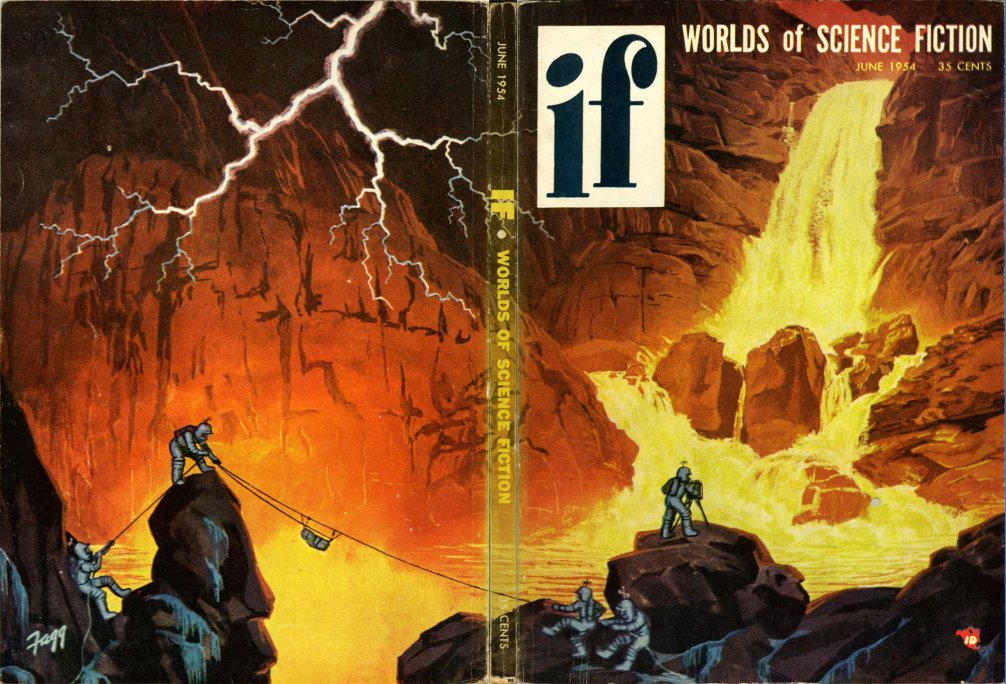
Mari Wolf’s “The First Day of Spring” first appeared in If, ed. James L. Quinn (June 1954). You can read it online here.

As I mentioned in my only other review of Mari Wolf’s work, she’s best known for her contributions to fandom including the Fandora’s Box column (1951-1956) in Imagination. In addition, Mari Wolf (1926-) published seven short stories between 1952 and 1954, six of which appeared in If. Unfortunately, after her divorce in 1955 from fellow SF author Rog Phillips (1909-1966), she stopped publishing SF. Here is a brief bibliographic blurb on her life, career, and SF endeavors. Ted White wrote an article about her in the fanzine e*I*5 (Vol. 1 No. 5) December 2002 (here). The issue also includes Wolf’s short story “Prejudice” (1953), which only received a fanzine publication.

The Nature of the Generational Voyage

Continue reading

Updates: Recent Science Fiction Purchases No. CCCXLVII (Edgar Pangborn, Rudy Rucker, Sally Miller Gearhart, and a SF anthology)

Which books/covers/authors intrigue you? Which have you read? Disliked? Enjoyed?

The first purchases of 2026!

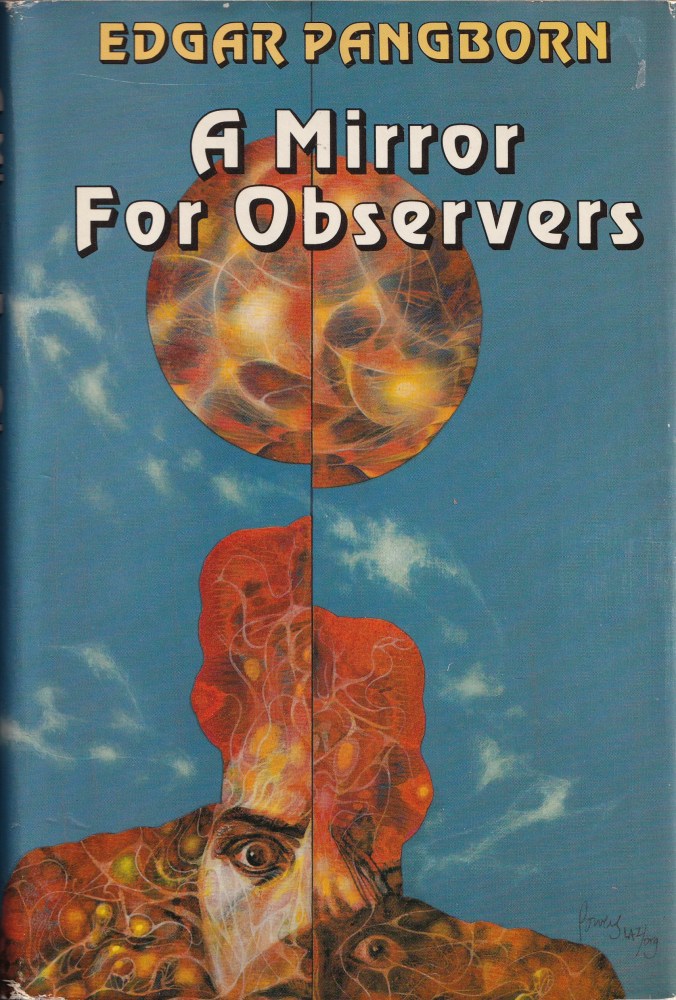
1. A Mirror For Observers, Edgar Pangborn (1954)

From the back cover: “We would call them Martians, though they refer to themselves as Salvayans. Refugees from their dying planet, they arrived on our world almost 30,000 years ago to make new lives for themselves. From their vast underground cities, hidden from discovery, the Salvayans have ben observing us with care and concern, waiting for the day when humans will be ready to meet them. The Salvayans are not many, but they are long-lived and patient….

Continue reading

What pre-1985 science fiction are you reading? + Update No. XXVII

What pre-1985 science fiction are you reading or planning to read next month? Here’s the October installment of this column.

If I’m feeling a bit unmotivated to write about science fiction, I always end up on Fanac or another online repository of fanzines/newspapers exploring all the old historical fannish debates. I especially enjoy their reports on various conventions and the community (from accepting to reactionary) that emerges. For example, the details I uncovered about a lost Philip José Farmer speech titled “SF and the Kinsey Report at the 11th World Science Fiction Convention (Philcon 2) in Philadelphia (September 1953) and Pat M. Kuras and Rob Schmieder’s article “When It Changed: Lesbians, Gay Men, and Science Fiction Fandom” (1980) on the first Worldcon panel with an openly LGBTQ topic: “The Closed Open Mind: Homophobia in Science Fiction Fantasy Stories” moderated by Jerry Jacks, one of the “early openly gay fans.” I recently edited a friend’s article for academic publication on the role of conventions in forming feminist and political activism. Conventions sound like fascinating places, at least from my historically-minded vantage point and lens.

Continue reading

What pre-1985 science fiction are you reading? + Update No. XXVI

What pre-1985 science fiction are you reading or planning to read next month? Here’s the August installment of this column.

The Power of the List. I adore lists. I’ve compiled lists of science fiction stories on my site about generation ship stories, immortality (abandoned), overpopulation (abandoned), and sports and games (abandoned). I religiously update my SF Novel and Short Story Review index and the Best SF Novels I’ve reviewed index. In your exploration of genre, I imagine you’ve encountered a “Best Of” list that horrified you — they tend to generate controversy, argument, and all sorts of impulsive takes. Lists can be dangerous. Lists can suggest canon. Lists exclude. Lists can be incomplete. Lists can motivate. Ian Sales, a long-time critic, author, and visitor to my site, created the SF Mistressworks (unfortunately, also abandoned) website in response to an egregious list that demonstrate utter ignorance about the wonderful SF written by women.

Continue reading